
How to Protect Plants from Frost in the UK
Published 25 June 2026
A practical UK guide to protecting plants from frost, from knowing when to act to fleecing, mulching, moving pots and lifting tender plants.
We earn commission from qualifying Amazon purchases. It costs you nothing and does not affect what we recommend.
Listen to this guide
Quick Answer
To protect plants from frost in the UK, act before the temperature drops below 0C: cover vulnerable plants overnight with a double layer of horticultural fleece, mulch the root zone to 5-8cm, and move pots to a sheltered, sun-facing spot or under cover. Lift tender perennials such as dahlias and cannas before the first frost and store the tubers somewhere cool and frost-free.
A single hard frost can blacken a season of growth overnight, and UK weather rarely gives much warning. Ground frost forms when the soil drops below 0C and air frost when the air does the same, freezing the water inside plant cells until they rupture. Tender plants such as dahlias, cannas, fuchsias and most summer bedding are the first to suffer, while hardy shrubs and conifers usually shrug it off.
The good news is that most frost damage is preventable with a bit of timing and the right materials. This guide walks through the steps in the order you should tackle them: knowing when to act, covering plants properly, insulating the soil, protecting containers, and bringing the most tender plants under cover. Follow them before the cold arrives and you will lose far fewer plants by spring.
Know when to act and which plants to prioritise
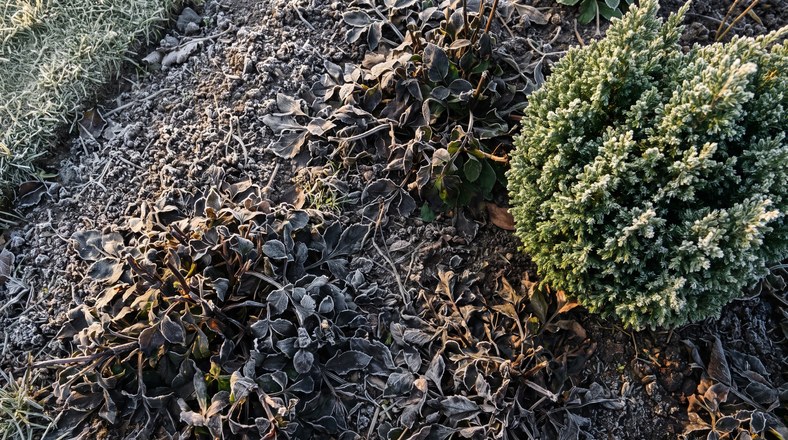
Frost can begin forming once the air dips below 0C, but the trick is to prepare a week or so ahead rather than scrambling on the night. Driving stakes and pegs into frozen ground is miserable work, and a cold snap often arrives sooner than the forecast suggests. Check a reliable local forecast through autumn and have your materials ready from late September onwards.
Not every plant needs covering, so focus your effort where it counts. Prioritise in this order:
- Tender perennials and summer bedding - dahlias, cannas, begonias, pelargoniums, fuchsias.
- Tender crops - tomatoes, potatoes, courgettes and anything still cropping outdoors.
- Container plants, which freeze faster than plants in the ground because the roots have little insulation.
- Borderline-hardy shrubs and exotics such as tree ferns, bananas and pittosporum.
Hardy plants like conifers, hellebores and most established shrubs can be left alone. If you are nervous about losing a favourite tender plant, take cuttings in late summer as a backup so a bad frost is not the end of it.
Cover vulnerable plants with horticultural fleece
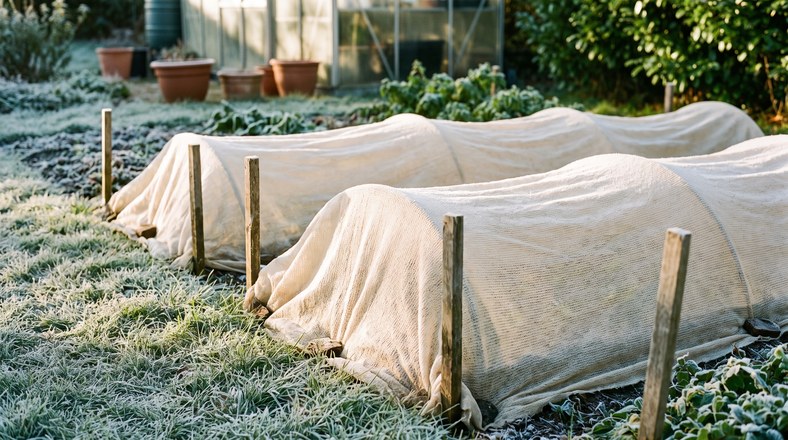
Covering traps a thin layer of warmer air around the plant and lifts the temperature underneath by a couple of degrees, which is often enough to make the difference. Horticultural fleece is the material of choice because it breathes, lets light through and does not trap moisture against the foliage.
- Use a double layer of fleece, an old bed sheet or hessian over plants overnight when frost is forecast, and take it off during mild days so air and light can reach the leaves.
- Secure the cover with stakes, pegs or stones so wind cannot whip it off, and make sure it reaches the ground to hold warmth in.
- For rows of crops such as lettuce, use a fleece tunnel or cloches that are quick to lift on and off.
- Avoid plastic sheeting laid directly on foliage. It traps condensation that freezes and causes more damage than it prevents, and any leaf touching the cold plastic will still freeze.
If you garden somewhere exposed, a temporary windbreak of woven fabric or wooden panels on the windward side cuts the wind chill that dries out and browns evergreen foliage.
Mulch the soil to insulate roots
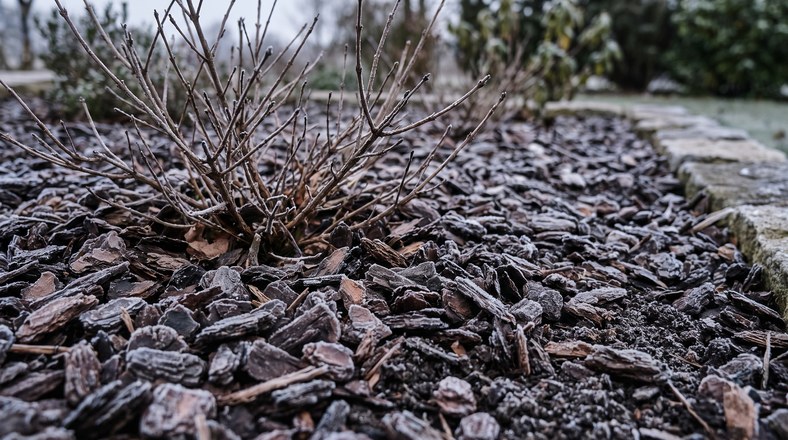
A thick mulch acts like a duvet over the soil, slowing how fast the ground freezes and reducing the damaging freeze-thaw cycles that heave roots out of the ground. It is one of the simplest and most effective things you can do for borders, shrubs and tender perennials.
- Spread organic matter such as bark chips, straw, leaf mould or well-rotted compost 5-8cm deep over the root area.
- Gravel or slate chippings work too and give good drainage, though they do not feed the soil the way organic mulch does as it breaks down.
- Time it right: mulch after the soil has cooled but before hard frost sets in, so you trap residual warmth rather than locking the cold in.
- Keep mulch a few centimetres clear of stems and trunks to avoid rot, and clear excess snow off beds where you can so meltwater does not waterlog the roots.
For fruit and strawberries, a loose packing of straw or bracken over the crowns gives extra protection through the worst of the cold.
Protect pots and containers

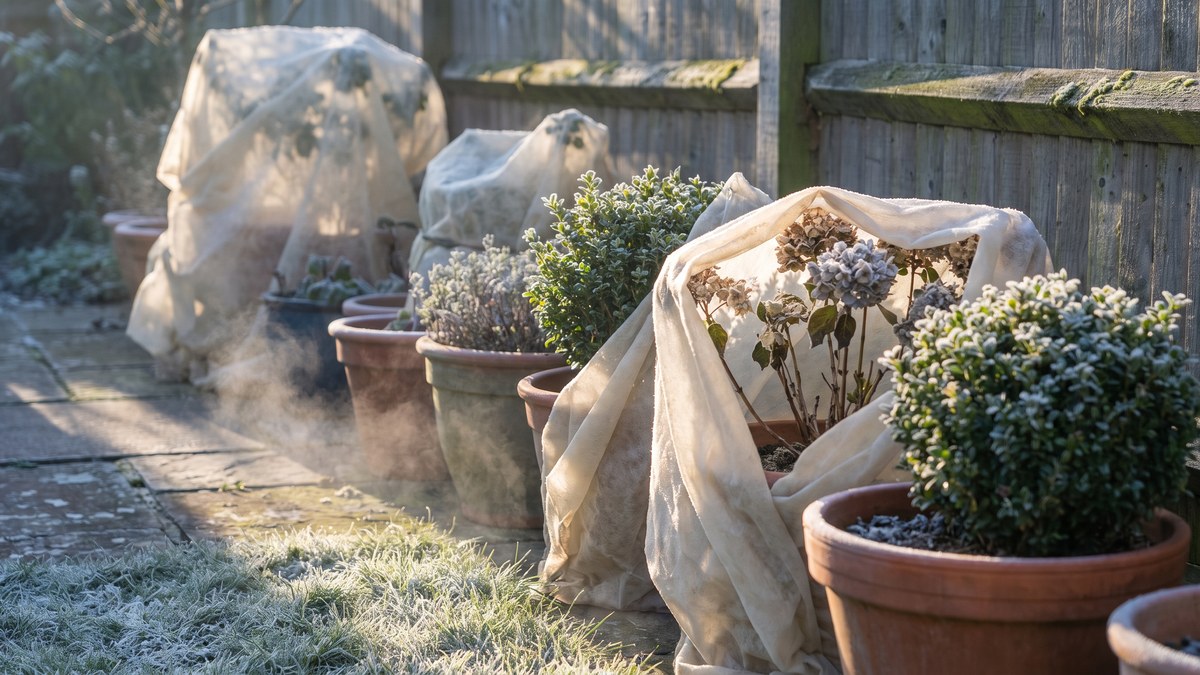
Container plants are far more vulnerable than the same plant in open ground because the compost freezes solid much faster, killing the roots even when the top growth looks fine. A few small changes make a big difference.
- Group pots together in a sheltered spot, ideally against a south-facing wall or under eaves where the brickwork radiates a little stored warmth.
- Raise pots onto pot feet or bricks so they drain freely and do not sit in freezing water, which is as damaging as the cold itself.
- Wrap the pots, not just the plants, in bubble wrap or hessian to insulate the root ball. The aim is to protect the compost, so cover the sides and base where you can.
- Go easy on watering through winter, and water in the morning rather than at dusk so the roots are not sitting wet overnight. Hold off entirely on succulents and cacti, which rot if kept damp in the cold.
Terracotta and ceramic pots can crack when the compost inside freezes and expands, so wrapping protects the pot as well as the plant. If you have a covered store or shed, moving the most precious or tender containers inside for the worst spells is the surest option.
Lift and overwinter the most tender plants
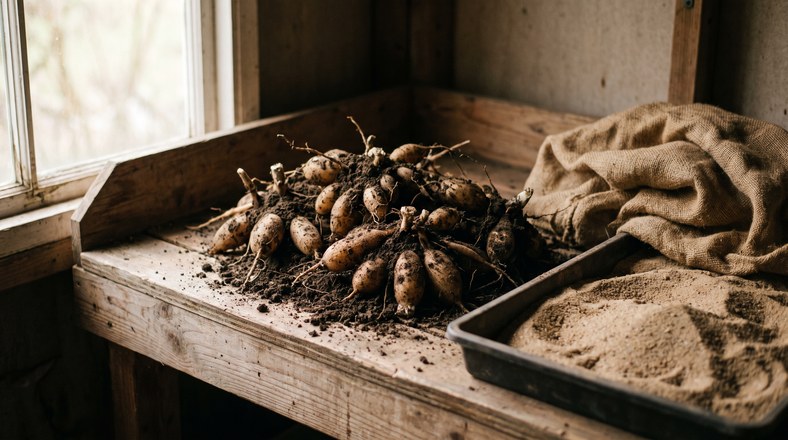
Some plants are too tender to leave outside whatever you wrap them in, and the safest approach is to bring them under cover for winter. This is standard practice for tubers and tender perennials across most of the UK.
- After the first light frost blackens the foliage, lift dahlias, cannas, gladioli and begonias. Cut back the top growth, shake off excess soil and let the tubers dry for a few days.
- Store the dry tubers in a cool, frost-free shed, garage or cold frame, layered in dry compost, sand or peat-free coir to keep them dormant and stop them rotting.
- Move tender pots such as pelargoniums and fuchsias into a frost-free greenhouse, porch or cold frame. If you use a greenhouse, line the inside with bubble wrap and add a thermostatically controlled heater for the coldest nights.
- For plants too big to move, such as tree ferns and bananas, pack straw over the crown and hold it in place with chicken wire or string, which keeps the centre warm while still letting air through.
A weatherproof garden storage box or shed is ideal for keeping lifted tubers and small tender pots together in a dry, frost-free spot, and for stashing your fleece, bubble wrap and stakes so they are to hand the moment a frost is forecast.
Frequently Asked Questions
At what temperature should I start protecting plants from frost?
Frost can begin forming once the air or ground drops below 0C, so take action before the temperature falls that far rather than waiting until everything is already frozen. Cover and prepare vulnerable plants when a forecast shows nights approaching freezing, and have your materials set up a week or so in advance because UK cold snaps often arrive earlier than expected.
Can I use a bedsheet or plastic instead of horticultural fleece?
An old bedsheet, blanket or hessian works fine as an overnight cover and is a good free alternative to fleece. Avoid plastic sheeting laid directly on plants, as it traps condensation that freezes and any leaf touching the cold plastic still freezes. If you only have plastic, support it on hoops or stakes so it never touches the foliage, and remove it during the day.
Should I water plants before a frost?
Lightly watered soil holds and releases more warmth overnight than dry soil, so water in the morning before a frosty night rather than at dusk, which leaves roots sitting cold and wet. The exception is succulents and cacti, which should be kept on the dry side through winter because excess moisture makes frost damage far more likely.
My plant looks dead after frost - should I dig it up?
Not yet. Blackened or brown foliage often looks worse than it is, and many plants regrow from dormant buds at or below soil level once it warms up. Wait until no more frost is expected before pruning back damaged growth to a healthy bud, then feed with a general-purpose fertiliser to encourage strong regrowth. Give the plant until mid-summer to reshoot before deciding to replace it.
Related Reading
- Enzeno 420D Garden Furniture Cover review
- Keter Store It Out Nova review
- How to Get Rid of Ants in the Garden (UK): A Calm, Practical Guide
- How to Get Rid of Fungus Gnats in Houseplants (UK Step-by-Step Fix)
Disclaimer: This article contains Amazon affiliate links. We may earn a small commission from qualifying purchases at no extra cost to you.