
How to Repair Bare Lawn Patches in Autumn (UK Guide)
Published 13 August 2026
Early autumn is the best time to fix bare patches in a UK lawn. This guide covers the September sowing window, soil preparation, seed rates and the aftercare that gets repairs rooted in before the first frosts.
We earn commission from qualifying Amazon purchases. It costs you nothing and does not affect what we recommend.
Quick Answer
Rake out the dead grass, loosen the top few centimetres of soil, mix in a little compost, then sow a hard-wearing grass seed at 25 to 35g per square metre and keep it moist. In the UK the ideal window is early September to mid October, while soil is still 10 to 16°C - seed germinates in 7 to 14 days and roots in before the first frosts.
- Pick Your Window: Early September to Mid October
- Find and Fix What Caused the Patch
- Prepare the Patch: Rake, Loosen, Level
- Sow Grass Seed at the Right Rate (or Patch with Turf)
- Water, Protect and Wait for Germination
- Aftercare: First Cut, Autumn Feed and Frost
- Frequently Asked Questions
- Related Reading
By the end of a British summer most lawns carry scars: a brown circle where the paddling pool stood, a threadbare goal mouth, scorch marks from the dry spells and the odd crater a dog or a badger contributed. The good news is that the repair window is just opening. Early autumn is the best time of the whole year to fix bare patches in a UK lawn, and the job itself is cheap, quick and hard to get wrong once you know the sequence.
This guide walks through that sequence: when to sow, how to work out what killed the grass in the first place, how to prepare each patch, the right seed rate, and the watering and aftercare that carry new grass safely to its first frost. Follow it and the patches you are staring at now will be invisible by spring.
Pick Your Window: Early September to Mid October
Early autumn is the single best moment in the UK lawn calendar to fix bare patches. The soil is still holding summer warmth - typically 12 to 16°C in early September - while the air has cooled and rain returns, which is exactly the combination grass seed wants. Germination is fastest between 10 and 16°C, so seed sown now is usually up within a fortnight, something spring sowings into cold March soil cannot match.
Autumn also stacks the odds in your favour in quieter ways:
- Less weed competition. Most annual weed seeds germinate hardest in spring, so an autumn seedbed stays cleaner.
- Free watering. September and October rain does most of the irrigation for you.
- Two growing windows. Grass sown in September roots before winter, then thickens again in spring before the lawn takes any real summer wear.
The window is not endless, though. New grass needs four to six weeks of growth before regular frosts arrive, so aim to have seed down by mid October in southern England and Wales, and by late September in northern England and Scotland, where the first frosts often arrive in October. Sow much later and germination slows to a crawl once soil temperature drops below about 8°C.
Reading this in August? Perfect timing. Use the next week or two to diagnose your patches and prepare the ground, then sow as soon as the heat breaks and steady rain returns - usually the first half of September.
Find and Fix What Caused the Patch
Reseed a patch without fixing its cause and you will be doing the same job again next autumn. Before you reach for the rake, work out what killed the grass, because the fix changes with the culprit:
- Summer wear. Goal mouths, the strip under the washing line and the circle where a paddling pool sat all summer are the classics. The grass here is compacted and worn rather than diseased. Repair with a hard-wearing ryegrass mix and, for permanent routes, consider stepping stones.
- Drought scorch. After a dry summer, straw-coloured grass often greens up on its own once rain returns. Give it two to three weeks, and only reseed the areas that stay brown and lift away with no resistance.
- Dog urine. Round dead patches with a lush dark-green ring give this away. Water the spot heavily to flush the salts, rake out the dead grass and reseed.
- Shade. Thin, patchy grass under trees or beside fences needs a shade-tolerant seed mix, plus pruning back whatever is stealing the light where possible.
- Grubs. If turf peels back like loose carpet, or birds, foxes and badgers have been ripping it up overnight, chafer grubs or leatherjackets are probably feeding on the roots. Early autumn is the right time to apply nematode treatments for these, while the soil is still warm.
- Compaction or buried rubble. A patch that fails repeatedly in the same spot often has compacted soil or builder's debris underneath. Fork it open and check before you resow.
One more reason not to skip this step: any patch you leave bare through autumn will not stay bare. Moss and weed seedlings colonise exposed soil over a damp UK winter, and by spring you will have a bigger job than a simple reseed.
Prepare the Patch: Rake, Loosen, Level
Good preparation is what separates a patch that vanishes into the lawn from one that stays threadbare. Seed needs three things from the ground: loose soil to root into, firm contact so it does not dry out, and a level surface flush with the surrounding lawn. Ten minutes per patch gets you all three.
- Mow the area first. Cut the surrounding lawn reasonably short so the new grass is not shaded out while it establishes.
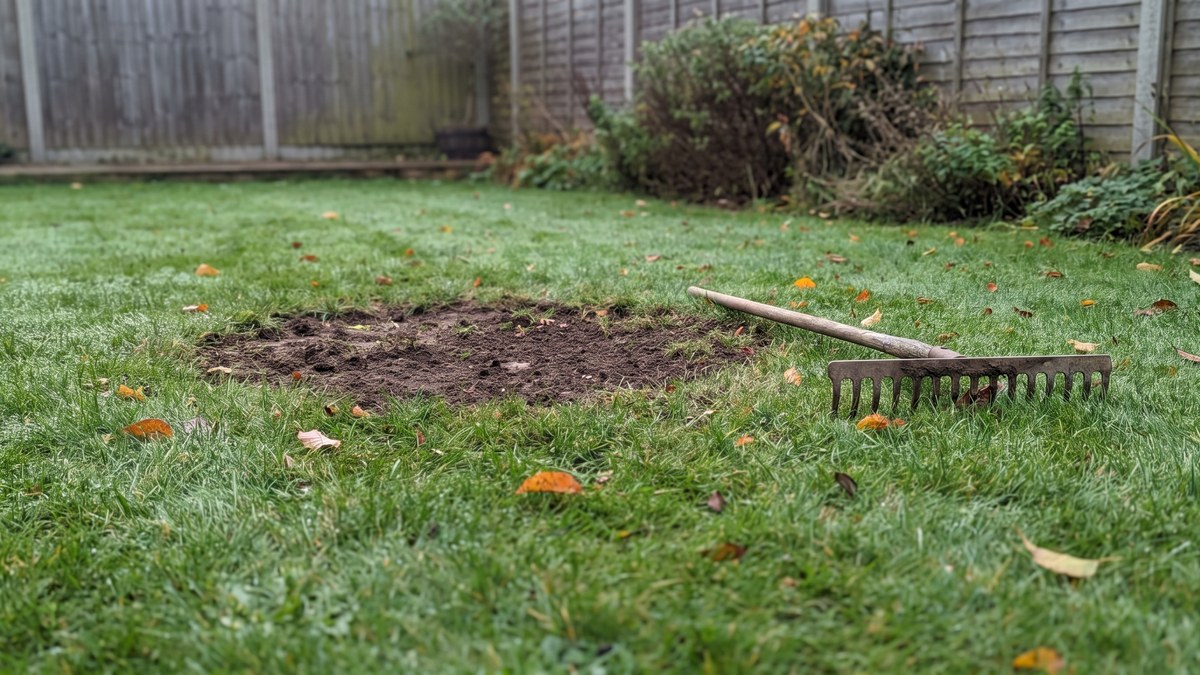
- Rake out the dead material. Use a spring-tine rake and be rough about it - dead grass, moss and thatch all come out until you can see soil across the whole patch.
- Loosen the top 3 to 5cm. Prick and lever with a hand fork, breaking lumps down to a fine crumb. If the patch failed through compaction, push a garden fork in deeper and rock it to open up the soil below.
- Improve the seedbed. Work a couple of handfuls of multi-purpose compost into each patch - it holds moisture around the germinating seed and gives fine roots an easy start. A 40 litre bag such as Growmoor's multi-purpose covers a whole autumn of lawn repairs with plenty left over for pots. On heavy clay, mix in a handful of sharp sand as well to stop the surface capping.
- Firm and level. Tread the patch lightly, then rake the surface level with the surrounding soil. Aim for the texture of breadcrumbs, not dust or clods.
If the ground is bone dry after a warm spell, water the prepared patch and let it drain before sowing rather than after - you will avoid washing seed into the corners.
Sow Grass Seed at the Right Rate (or Patch with Turf)
Match the seed to the job before you buy. For family lawns that take feet, footballs and dogs, a hard-wearing perennial ryegrass mix is the right choice - it germinates fastest in autumn conditions and shrugs off wear. For a shaded patch choose a shade-tolerant blend instead, and if you have a fine ornamental fescue lawn, use a fescue mix so the repair does not stand out in texture.
Two seeds we have reviewed suit autumn repairs well. Pronto Seed's premium mix is quick out of the ground and blended for the UK climate, and a 1.4kg bag comfortably covers a season of patching. If you have lots of patches, or plan to overseed the whole lawn while you are at it, GroundMaster's 2.5kg bag is the more economical route.
How much seed, and how to sow it
- Rate: on bare soil, sow at 25 to 35g per square metre - a rounded handful. The headline coverage on most packs assumes overseeding thin but living grass, which only needs about half that, so do not stretch a bag by the label maths on bare patches.
- Spread evenly: split the seed for each patch in two, then sow half up and down and half side to side.
- Rake in lightly so the seed sits in the top 5mm of soil, then sieve a thin layer of compost over it. This hides seed from birds and keeps it damp.
- Press it in. Tamp with the back of the rake, or lay a board down and step on it. Seed in firm contact with soil germinates; seed perched on top dries out.
Want it green this weekend? Patch with turf instead
Turf gives an instant repair, and autumn is also the ideal time to lay it. Cut out the damaged area as a neat square about 5cm deep, prepare the base exactly as above, then bed in a matching piece - either bought turf or a square lifted from an out-of-the-way corner of your own lawn, which blends in far better. Firm it down level with the surrounding grass, brush a sandy topdressing into the joints and water heavily. Expect to keep watering for several weeks while it roots.
Water, Protect and Wait for Germination
Water the patch straight after sowing, and gently. A watering can with a fine rose is the right tool - a hard pour or a strong hose jet washes seed into drifts, and the patch comes up in clumps and gaps. Something like the Zuvo 6.5L can with its detachable rose head puts water on softly enough that the seed stays put.
After that, the rule is simple: the top couple of centimetres must stay moist until the grass is up, then damp until it is established. A typical UK September does much of this for you, but check daily and water any morning the surface has dried pale. Moist, not swimming - waterlogged seed rots.
Protection matters just as much:
- Birds: the thin covering of compost hides most of the seed. For a prized lawn, pin fleece or netting over the patch, or lay a few twiggy prunings across it.
- Feet and paws: keep people, dogs and the mower off the patch completely until the first cut. Rope it off if you have children who forget.
Then be patient, with these autumn timelines in mind:
- Ryegrass mixes show green shoots in 5 to 10 days in early September soil, closer to 14 as October cools.
- Fescue and shade mixes take 14 to 21 days - slower is normal, not failure.
- A patch usually looks respectable in four to six weeks and blends in fully by spring.
Sown very late - past mid October - seed may barely move before winter. Do not dig it over in frustration: most of it sits dormant in the soil and finishes the job as temperatures climb in March and April.
Aftercare: First Cut, Autumn Feed and Frost
New grass at 5 to 7cm tall is ready for its first trim. Set the mower to its highest cut, make sure the blade is sharp, and mow on a dry day, taking off no more than a third of the height. A blunt blade tugs seedlings straight out of the loosened soil. Ease the cutting height down gradually over the following month until the patch matches the rest of the lawn.
Feeding helps the repair root in, but only the right feed:
- Use an autumn lawn feed - low in nitrogen, high in potassium and usually iron - which builds root strength ahead of winter.
- Do not use leftover spring or summer feed. Its high nitrogen forces soft, sappy growth in autumn that frost and fungal diseases such as fusarium punish hard.
- Feed the whole lawn, not just the patch. Feeding only the repair leaves a permanently darker square, like a carpet offcut that does not quite match.
As for frost: relax. Grass that germinated three or more weeks before the first frost copes with a typical UK autumn without trouble. Growth simply slows below about 6°C and stops for winter, then the patch thickens again in spring. Two genuine cautions - never walk on new grass while it is white with frost, because the frozen blades snap and bruise, and keep fallen leaves raked off repairs, since a fortnight under a wet leaf blanket can smother seedlings that survived everything else.
Come April, look the repairs over. Any that are thinner than the surrounding lawn get a light overseed at half rate, and by early summer you should not be able to find them.
Frequently Asked Questions
How late can I sow grass seed in autumn in the UK?
Mid October is the practical cut-off in southern England and Wales, and late September in Scotland and upland northern England. Grass seed germinates reliably while soil stays above about 8 to 10°C; sown later it comes up slowly and patchily, or lies dormant until spring. Late-sown seed is rarely wasted, but if you miss the window it is often better to prepare the patch now and sow in April.
Can I just scatter grass seed on a bare patch without preparing the soil?
You can, but expect most of it to fail. Seed lying on compacted soil dries out, gets eaten by birds or washes away before it can root. Two minutes of raking the surface open, plus a light covering of compost and a firm press-down, is the difference between a handful of survivors and a full repair.
How do I repair a worn lawn edge in autumn?
Use the turf-flip trick. Cut a square of turf containing the damaged edge, slice underneath to lift it in one piece, then turn it 180 degrees so the healthy inner edge faces outwards and the worn part faces into the lawn. Re-lay it level, then reseed the worn strip, which now sits surrounded by grass. Autumn conditions suit this repair just as well as patch reseeding.
Will frost kill my newly germinated grass?
Not usually. Seedlings that have been up for two to three weeks tolerate ordinary UK autumn frosts; growth just pauses until spring. The real risks are walking on frosted young grass, which snaps the frozen blades, and a hard frost arriving within days of germination - which is why sowing by early October matters more than anything you do afterwards.
Related Reading
- Pronto Seed Premium Grass Seed review
- GroundMaster Premium Lawn Grass Seed review
- Growmoor Multi-Purpose Compost review
- What Order to Do Lawn Care in the UK (Scarify, Feed, Seed - The Right Sequence)
- Can I Grow Grass in the Summer? Complete Guide to Summer Lawn Seeding
Disclaimer: This article contains Amazon affiliate links. We may earn a small commission from qualifying purchases at no extra cost to you.