
Miracle-Gro Pour and Feed: The Ready-Mixed Plant Food Indoor Gardeners Are Stocking Up On
We earn commission from qualifying Amazon purchases. It costs you nothing and does not affect what we recommend.
Pour it straight from the bottle onto the soil, no measuring jugs or mixing. It sounds almost too simple, but this best-selling plant food has become the default pick for UK houseplant lovers. Here's what 100 real reviews taught us, including the one complaint that keeps showing up.
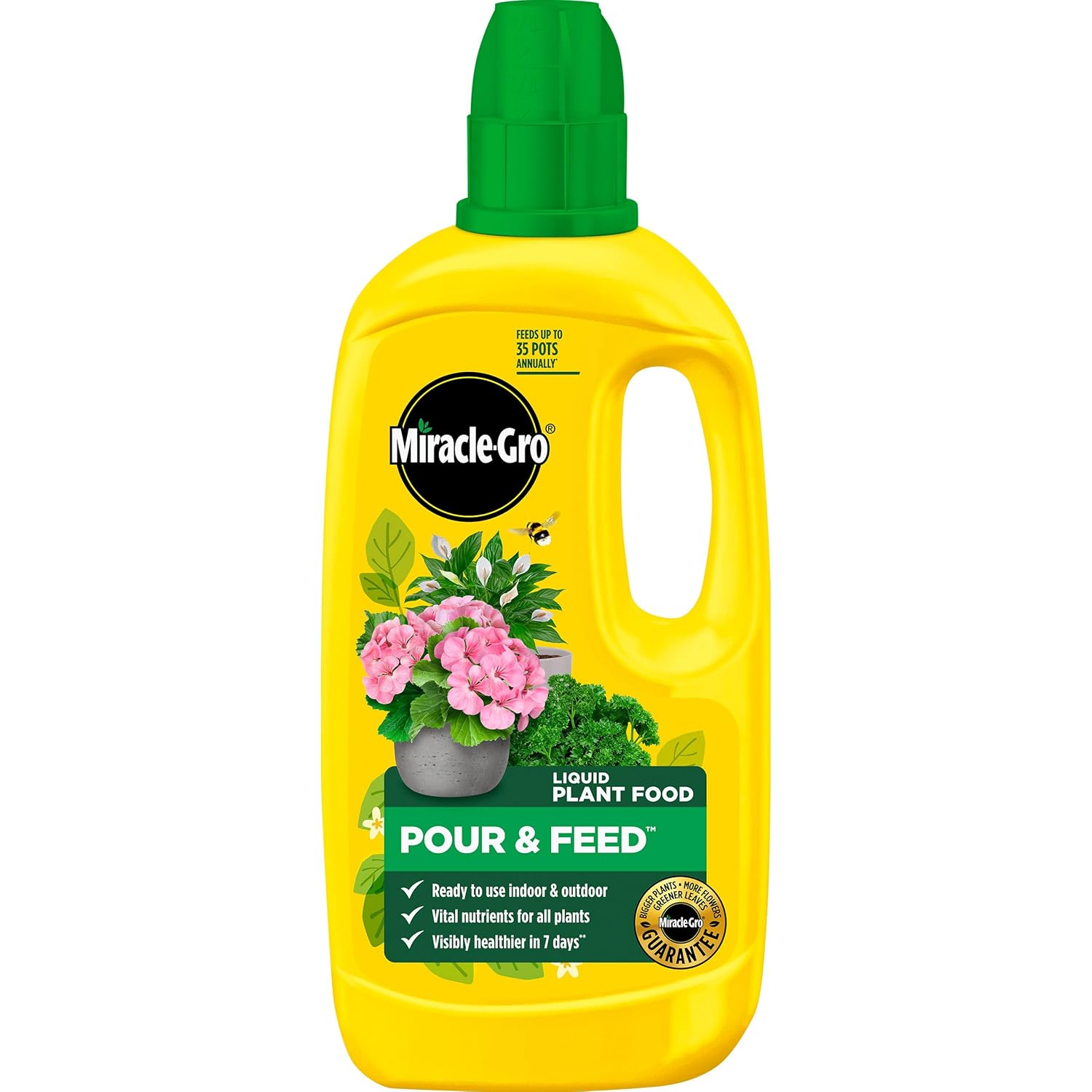
If you have ever stood at a garden centre shelf trying to work out the right dilution ratio for liquid feed, while holding a watering can and a screaming toddler, this product was made for you. Miracle-Gro Pour and Feed does what the name says and nothing more: you pour, the plant eats, you walk away.
At £3.97 for a 1L bottle (down from an RRP of £5.49), it has quietly become one of the UK's best-selling flower fertilisers. Amazon lists it as the number one pick in the Flower Fertilisers category, and more than 7,000 bottles left warehouses in the last month alone. The 4.5-star average across 4,937 ratings is solid, but the more interesting story sits in the handful of 1 and 2-star reviews, which reveal exactly who should and shouldn't be reaching for this particular bottle.
We read through 100 verified reviews to figure out whether the Pour and Feed formula really is the lazy houseplant owner's best friend, or whether Miracle-Gro's concentrated version would serve you better.
The Divide: Who This Bottle Is For (And Who It Isn't)
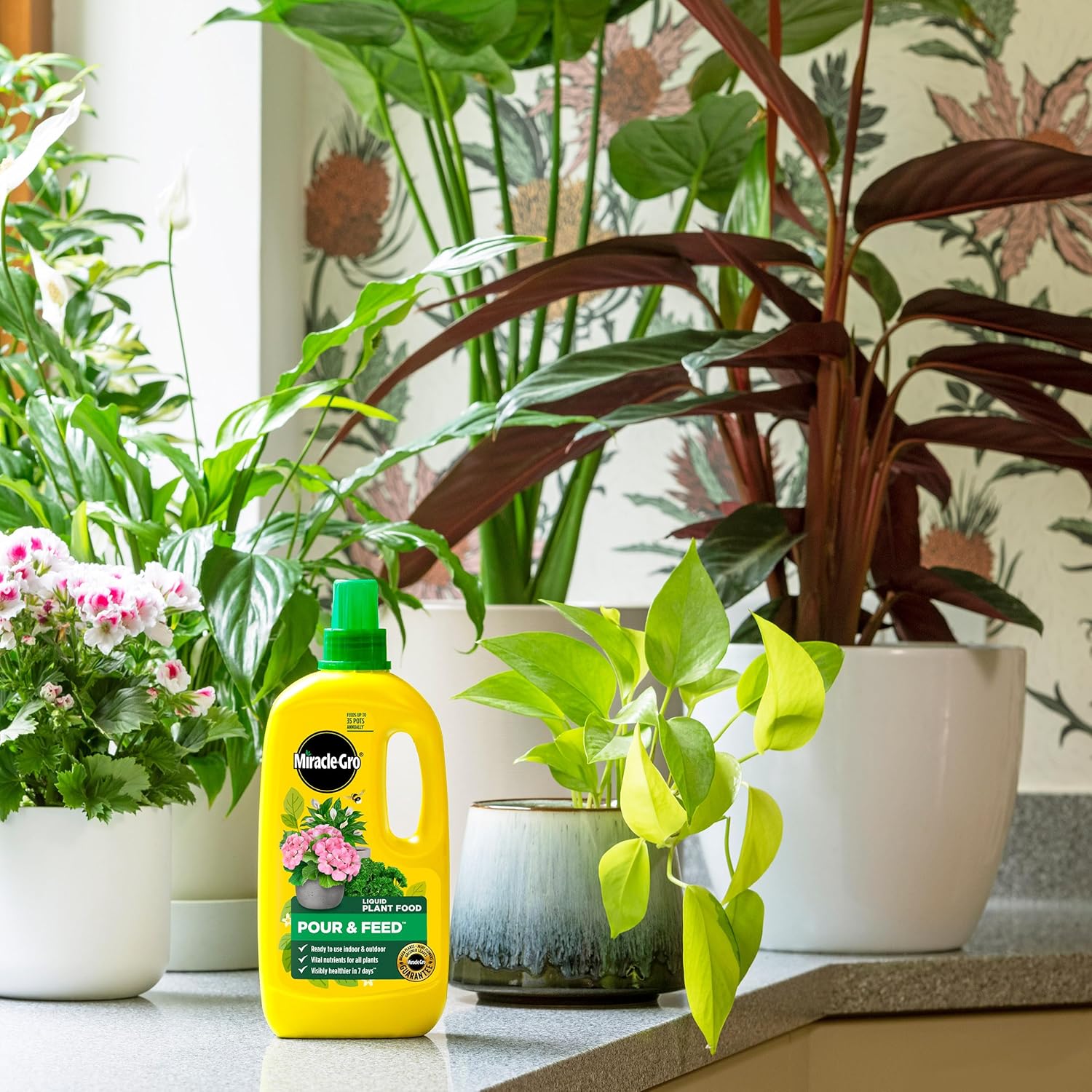
Here is the single most important thing to understand before you click buy. Miracle-Gro Pour and Feed is pre-diluted, ready-to-use plant food. It is not the classic concentrated Miracle-Gro that you measure into a watering can. This distinction is the source of every negative review on Amazon, and it's also the reason so many indoor plant lovers swear by it.
Diane, a three-star reviewer, put it bluntly: "I've fed nearly all my plants and the bottle is 3/4 empty. It would be great for a plant in an office or small flat with just one or two small plants, but not much good for my conservatory jungle." Nicholas was harsher in a two-star review titled "Poor value": "Very thin, measures are a capful or capfuls per plant pot depending on pot size, so it's not going to last very long."
Those reviewers aren't wrong, and neither is the product. They were just the wrong match. A 1L bottle gives you roughly 40 capfuls, which Miracle-Gro calculates is enough for around 20 medium houseplants. If you have a conservatory packed with ferns, a border full of pots, or thirty indoor plants across the house, you really will burn through a bottle in weeks. The concentrate is the smarter buy for you.
But if you have a kitchen windowsill of herbs, a few houseplants, a small balcony, or you're the kind of gardener who forgets to feed plants until they look sad, this is exactly the format you want. No measuring, no mixing, no working out whether it was two caps per litre or three.
What 76 Five-Star Reviewers Keep Saying
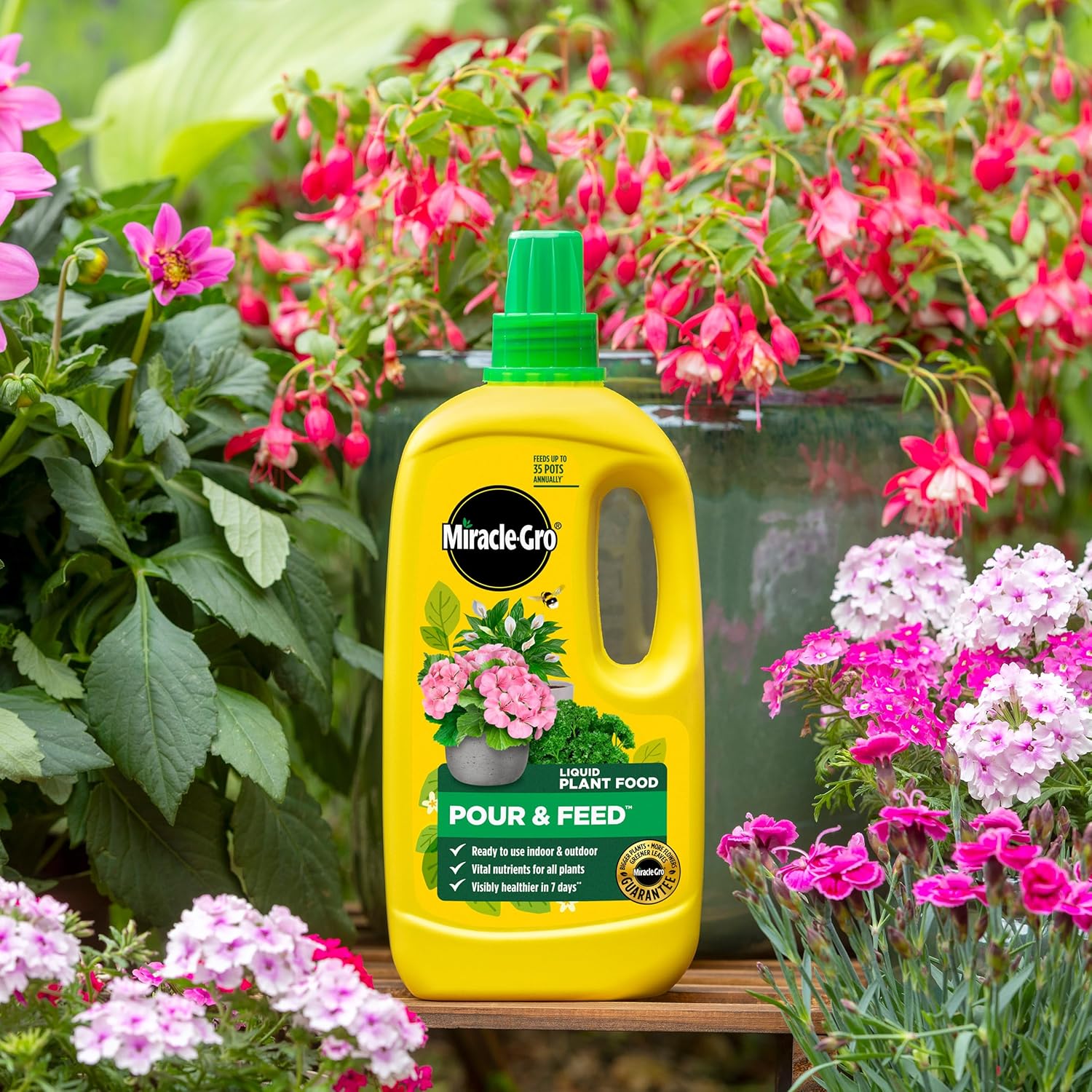
Out of 100 reviews we pulled, 76 were five stars. The positive feedback is remarkably consistent on three points: plants perk up fast, the no-mixing format is a huge win, and the price feels right.
Riley J. reported new growth "after not even a week" on houseplants, specifically calling out a spider plant that had been struggling. REE McCormack said her houseplants "really perked up since I started using it last month. They look healthier with lots of new leaves." Elizabeth described it as a "reviving magic" for plants, flowers and bushes, noting that everything "became much bigger and stronger." She also shared a clever tip we hadn't seen before: a tiny amount in a vase of shop-bought cut flowers makes them last longer.
Oleeta, whose five-star review is one of the more detailed ones, said: "My indoor plants had a growth spurt due to this fertiliser. I saw growth within 3 weeks once I started using this on my plants in May this year. I even used it on succulents and saw a slight growth in them." She did flag the same bottle-size concern as the critical reviewers, wishing for a larger format given her collection of 30-plus plants, but she still recommended it as a "good quality fertiliser."
The ready-mixed format comes up again and again as the decider. Derek Duckworth bought it because it was "already mixed so easy to use on house plants" and because Miracle-Gro is a "trusted brand." Sharon Wilson uses it on acers and flowers. Hilary Ward calls it "a must for tomato growers." Flexibility across plant types is part of why this specific format (as opposed to the dedicated rose, ericaceous and all-purpose variants also available) has become so popular.
Miracle-Gro Pour and Feed Liquid Plant Food 1L
Ready-to-use liquid plant food with no mixing or measuring. Ideal for houseplants, flowering plants and small container gardens. Visible results in as little as 7 days.
The Onur Essay: One Reviewer's Love Letter to Houseplant Care
Every now and then a reviewer writes something that deserves to be read in full. Onur, who left a five-star review on 15 August 2025 that racked up nine helpful votes, wrote what is effectively a short essay on indoor plant care. If you're new to houseplants, it's worth the read on the Amazon listing itself, but the gist is this: Onur keeps a collection of 12 indoor plants, treats himself to two small new ones each year, and has been using Miracle-Gro Pour and Feed as his brand of choice for years.
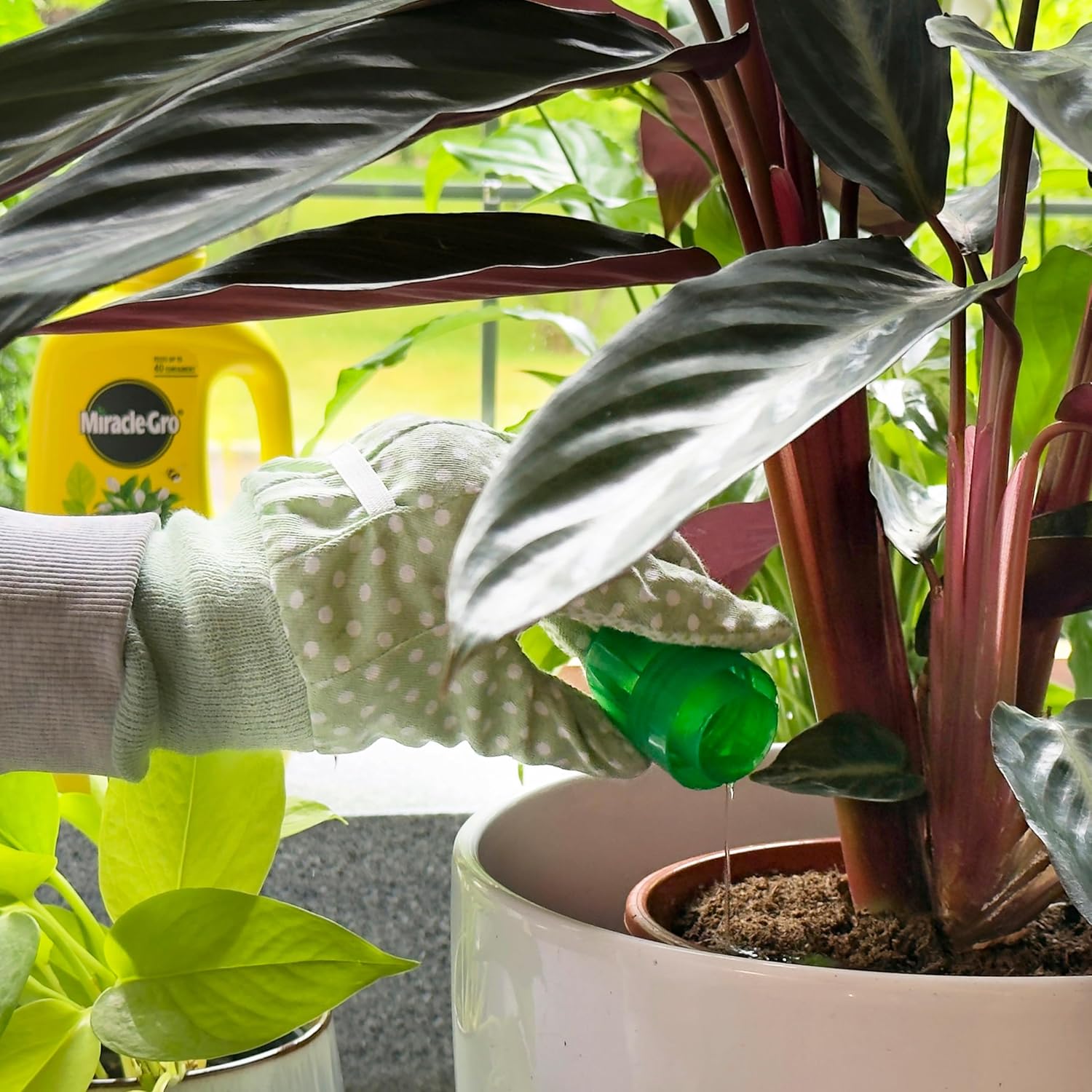
His application routine is useful if you're unsure how to use the product. He waters his plants twice a week during spring and summer, and once a week in winter, then pours the feed liquid into the soil after watering, while the soil is still wet. He applies two to four capfuls depending on the size of the container. He also makes a point we think is worth repeating: the results are not instant. They take time and patience. A capful today won't transform a sick plant by tomorrow, but over weeks the difference in leaf colour, new growth and general plant "volume" becomes obvious.
Onur also acknowledges the bottle-size limitation: "You can also use the liquid feed in your garden, although a 1 litre bottle will not last long or go far." He's a concentrated-feed user for garden use and a ready-mixed user for indoors. That split seems like the sensible way to use this product if you have both types of planting to care for.
How to Use It Without Wasting Any
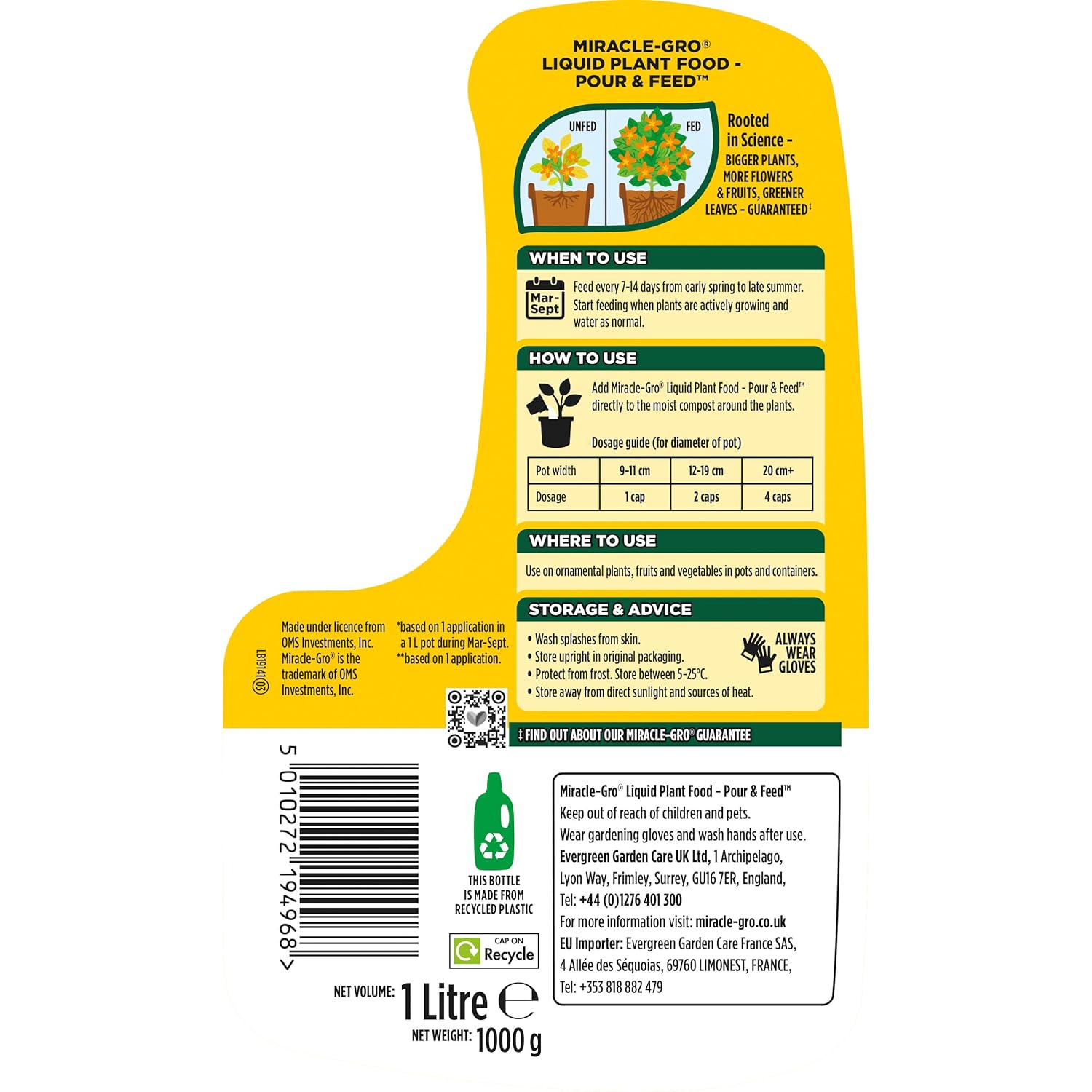
Miracle-Gro keeps the instructions delightfully short. Shake the bottle, pour a capful or two around the base of the plant, water afterwards. That is essentially it.
The back label gives you a rough dosage guide based on pot width: smaller pots take fewer capfuls, larger pots take more. For a standard kitchen windowsill herb or a modest houseplant, one capful is usually enough. The bottle holds around 40 capfuls and Miracle-Gro reckons that covers about 20 medium pots, so rationing matters if you have a lot of mouths to feed.
A few practical tips pulled from the reviews and the label itself:
- Apply to damp soil, not bone-dry soil. Onur's routine of watering first, then pouring the feed, is the correct approach. Feeding dry soil can burn roots.
- Feed during the active growing season (roughly March to October in the UK). Plants use less food in winter, so reduce or stop feeding in the colder months.
- Don't exceed the recommended capful count. More fertiliser doesn't mean more growth, and over-feeding can actually scorch leaves.
- Wear gloves. The label is clear on this. Avoid skin and eye contact, and keep it out of reach of kids and pets.
- Store upright with the cap on. Standard stuff, but worth a reminder so the bottle lasts between feeds.
One thing worth noting: Sabrina left a two-star review mentioning that the liquid in her most recent bottle looked "very pale brown" instead of the usual "dark brown" she had come to expect. If you suspect a bad batch, Amazon's returns policy is straightforward, but this appears to be a one-off quality concern rather than a widespread issue.
What You Are Actually Feeding Your Plants
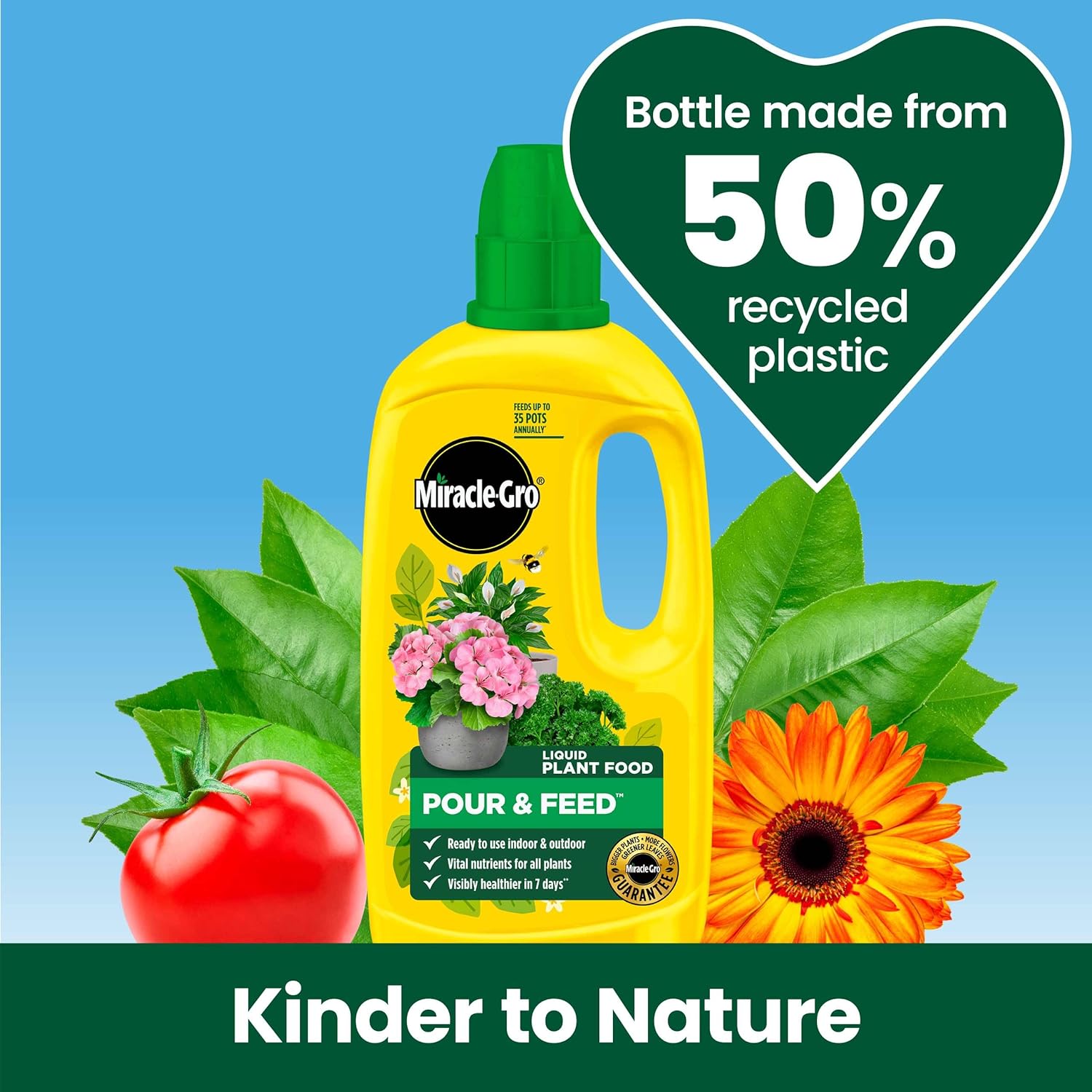
The formula is described by Miracle-Gro as a bio-stimulant rich in organic matter, designed to boost root formation and plant resistance alongside growth. That's a step up from the simple NPK (nitrogen, phosphorus, potassium) formulas of older generic plant foods, and it positions this as a feed that supports overall plant health, not just a growth spurt. The product is made in France and targets ornamental plants, fruits and vegetables across the board.
A few reviewers knocked off a star because they weren't quite sure about the environmental impact of a liquid chemical fertiliser, and that is a fair caveat. Liquid feeds will never be as planet-friendly as compost, worm tea or organic chicken pellets. If you're deeply committed to organic gardening, this isn't the product for you. But for most UK gardeners looking for a convenient mainstream feed from a trusted brand, the Pour and Feed bottle sits in a reasonable spot.
Final Verdict: A Format Problem, Not a Product Problem
Once you understand what the Pour and Feed format is actually designed for, most of the negative reviews start to look more like mismatches than genuine product failures. The feed itself works. The brand pedigree is solid. The price is fair. The issue is whether the pre-diluted 1L bottle fits your garden.
For indoor plant keepers with a sensible collection (up to about 20 plants), balcony gardeners, new houseplant owners, people who want zero hassle and anyone who has ever bought a concentrate bottle and never got round to mixing it, this is a genuine upgrade to your routine. For allotment holders, keen flower bed gardeners and anyone with more than 20-30 pots to feed, buy the Miracle-Gro concentrate instead. You'll get far more feed per pound.
Our rating reflects both sides. A 4.3 out of 5 from us, not quite the 4.5 Amazon average, because the pre-diluted format does represent poor value for larger gardens and that deserves acknowledging. But for the audience it's actually aimed at, it is one of the easiest ways to keep houseplants happy we've come across.
Miracle-Gro Pour and Feed Liquid Plant Food 1L
Ready-to-use liquid plant food with no mixing or measuring. Ideal for houseplants, flowering plants and small container gardens. Visible results in as little as 7 days.