
Provanto Ultimate Bug Killer 1L Review: What It Actually Fixes, And What It Burns
We earn commission from qualifying Amazon purchases. It costs you nothing and does not affect what we recommend.
Sort this spray's reviews by most helpful and a pattern shows up fast: the people raving about it are fighting thrips, mealy bugs and box moth caterpillars, often on indoor plants. The people writing it off are mostly trying to kill aphids outdoors. That gap explains nearly everything about the 4.4-star rating, and it should shape whether you click buy.
- The Pests This Spray Actually Kills
- The Aphid Reviews Are A Coin Flip, And Here's Why
- Plants That Don't Tolerate It
- UK Weather, Bees And The Two-Week Protection Claim
- The Bottle Itself Has Some Real Quality-Control Issues
- How It Stacks Up Against Natural Alternatives
- Who This £5.56 Bottle Actually Makes Sense For
There's a moment most UK houseplant owners know well. You wipe a leaf, hold it up to the window, and a dozen tiny pale specks start moving. Thrips. You try neem oil, you try soapy water, you try rinsing the whole plant in the shower like a madman, and nothing really sticks. Then you find a £5.56 bottle of Provanto Ultimate Bug Killer at the garden centre, spray it once, and the problem evaporates in 48 hours. Half the 4.4-star rating on Amazon is exactly that story, told over and over by people who had almost given up.
The other half is angrier. Aphids that shrugged it off, camellias with burnt leaves, bottles arriving with the seal already broken. That split isn't random and it isn't bad luck. Once you sort which bug you're actually fighting, and which plant you're spraying, the picture gets a lot clearer. This review pulls the real reviewer patterns apart so you can decide before you put a £5.56 bottle in your basket.
The Pests This Spray Actually Kills
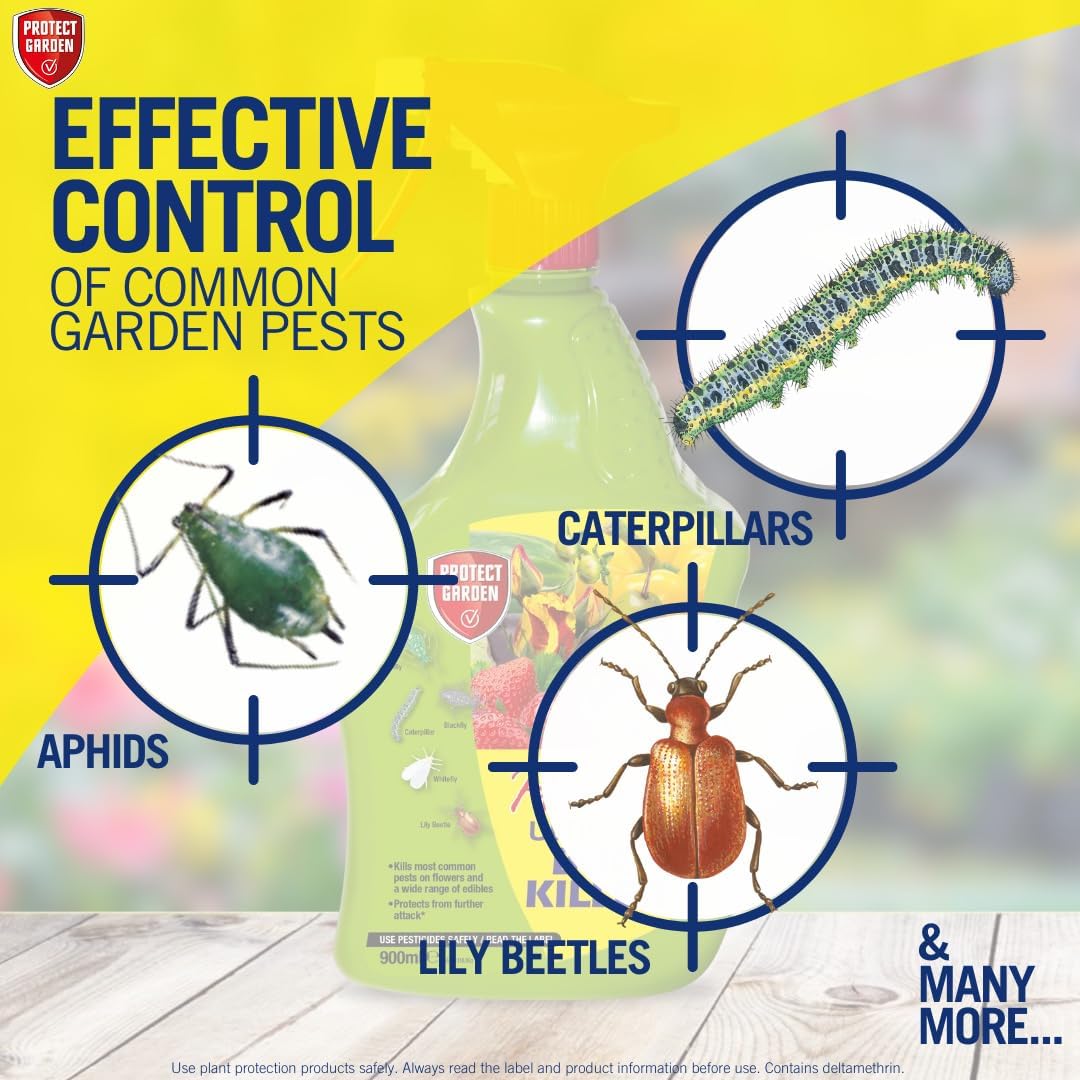
The glowing reviews cluster around a specific shortlist of pests, and it's worth being blunt about which ones.
Thrips are the single most mentioned pest in the positive reviews. One UK gardener who'd been battling them on a monstera wrote that after wiping each leaf with a cloth doused in Provanto, then spraying front and back every three days, they were clear after three applications. Another had them on an indoor succulent collection and said two days after a heavy spray and sticky traps, the traps were empty where before there had been ten thrips on each. These aren't casual compliments, they're people who'd already tried neem oil, showering the plants, repotting, blue traps. Nothing worked until this did.
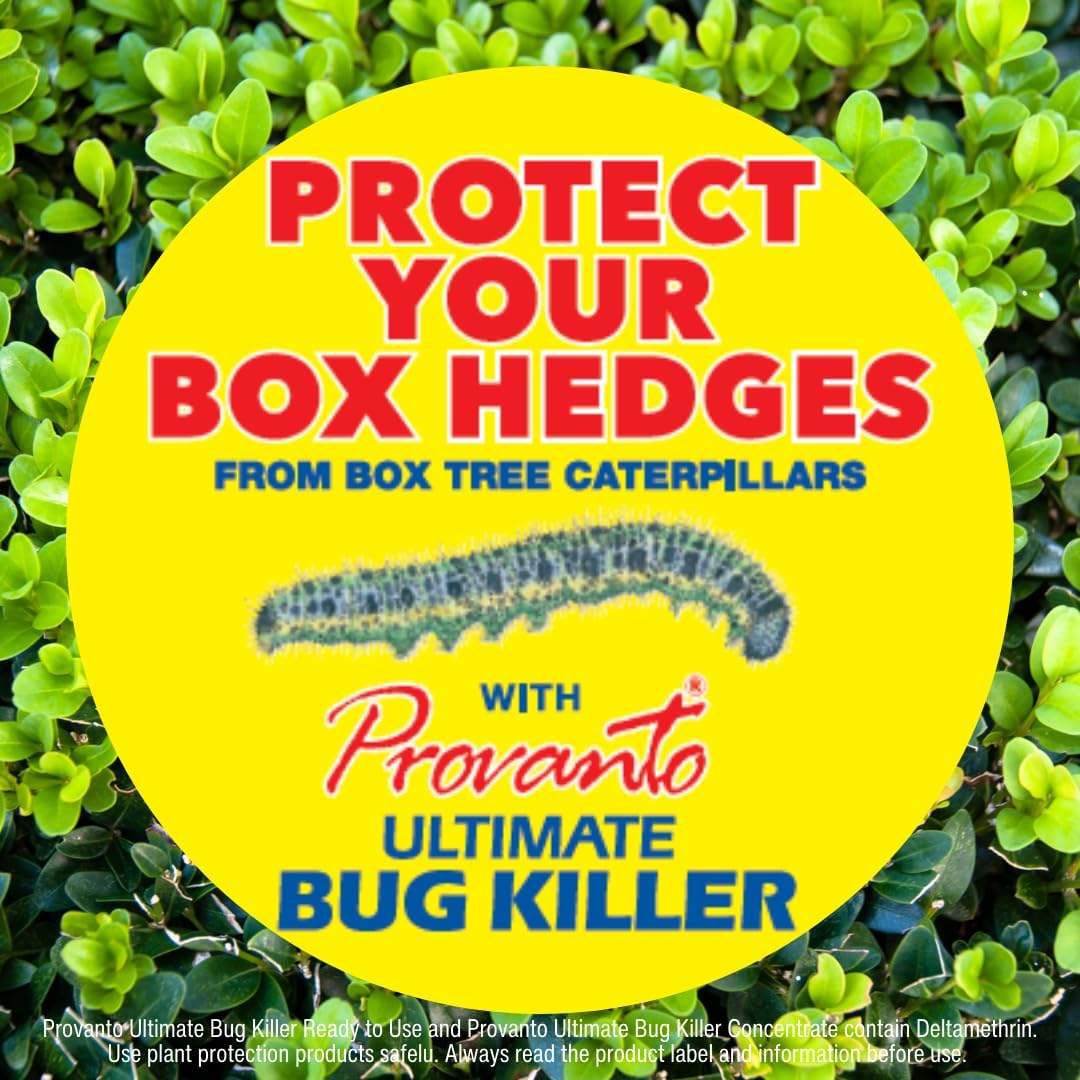
Mealy bugs come up almost as often, especially on orchids and houseplants near open doors. Box tree caterpillars on buxus are another stronghold, with one reviewer saying they use it every year on box hedge and it works every time. And greenfly on roses gets consistent short-and-sweet reviews: a couple of sprays and gone.
The common thread: small, soft-bodied insects sitting still on a leaf when you spray. That's contact insecticide territory and this product does that job well.
The Aphid Reviews Are A Coin Flip, And Here's Why
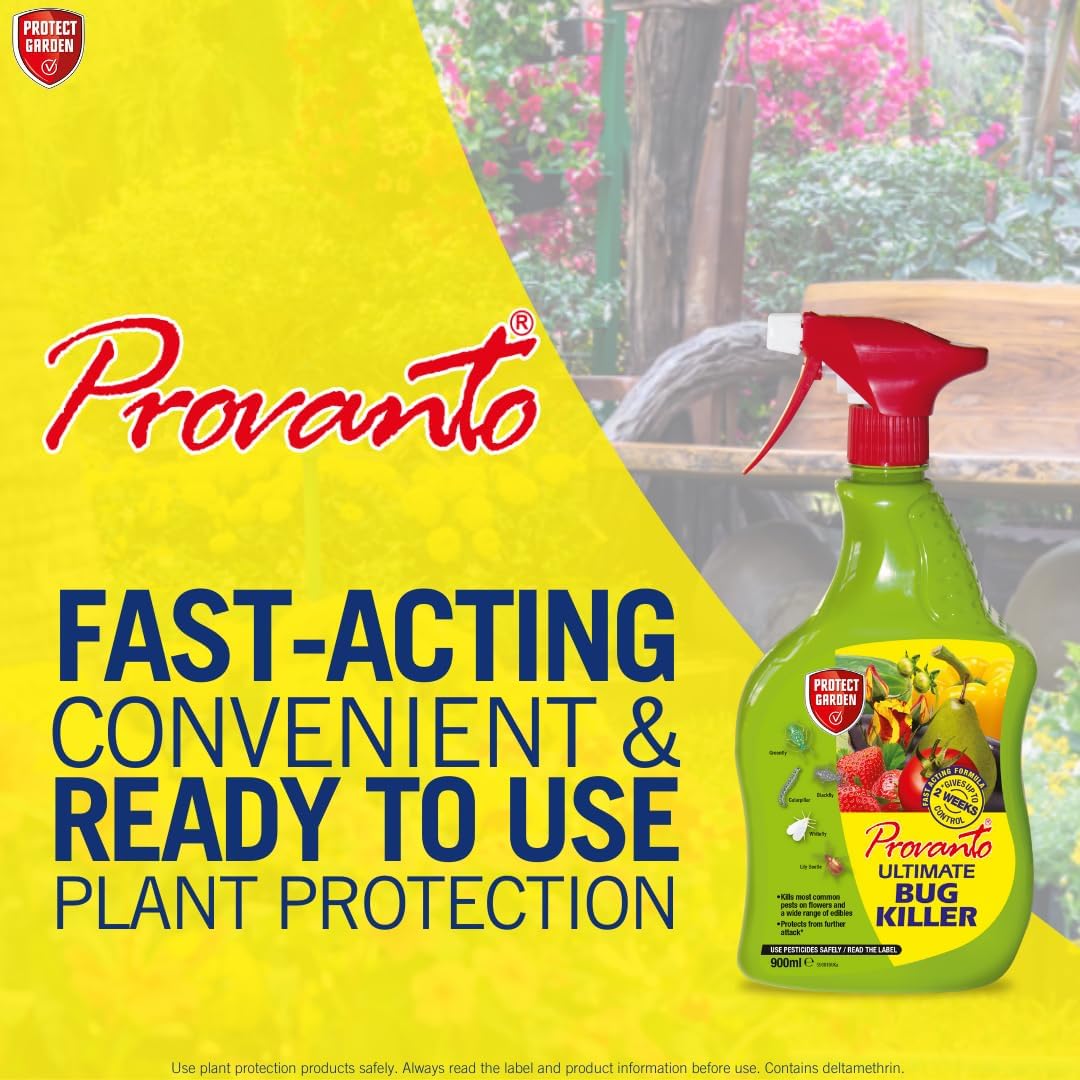
Aphids are where the reviews split down the middle. For every gardener saying greenfly vanished off their roses after two sprays, there's another complaining that blackfly, whitefly or aphids ravaged their jalapenos, camellias or tomatoes despite multiple applications.
The likely explanation is boring but important: aphids breed absurdly fast, hide on the underside of leaves, and live in dense colonies that shelter each other. Contact sprays only kill what they physically touch. If you spray the tops of rose leaves on a windy afternoon, you'll flatten the visible ones and miss a nursery of nymphs on the underside that reinfest the plant within a week. That's almost certainly why one reviewer was re-spraying their overwintering Carolina Reaper chilli plants every three to four days indoors and still losing ground.
If you're going to use this on aphids outdoors, plan for it. Spray thoroughly on both sides of every leaf, reapply after seven days regardless of what the two-week protection claim says, and hit the colony early before it builds up. If you're already dealing with a full infestation on a mature plant, this alone probably won't win that fight.
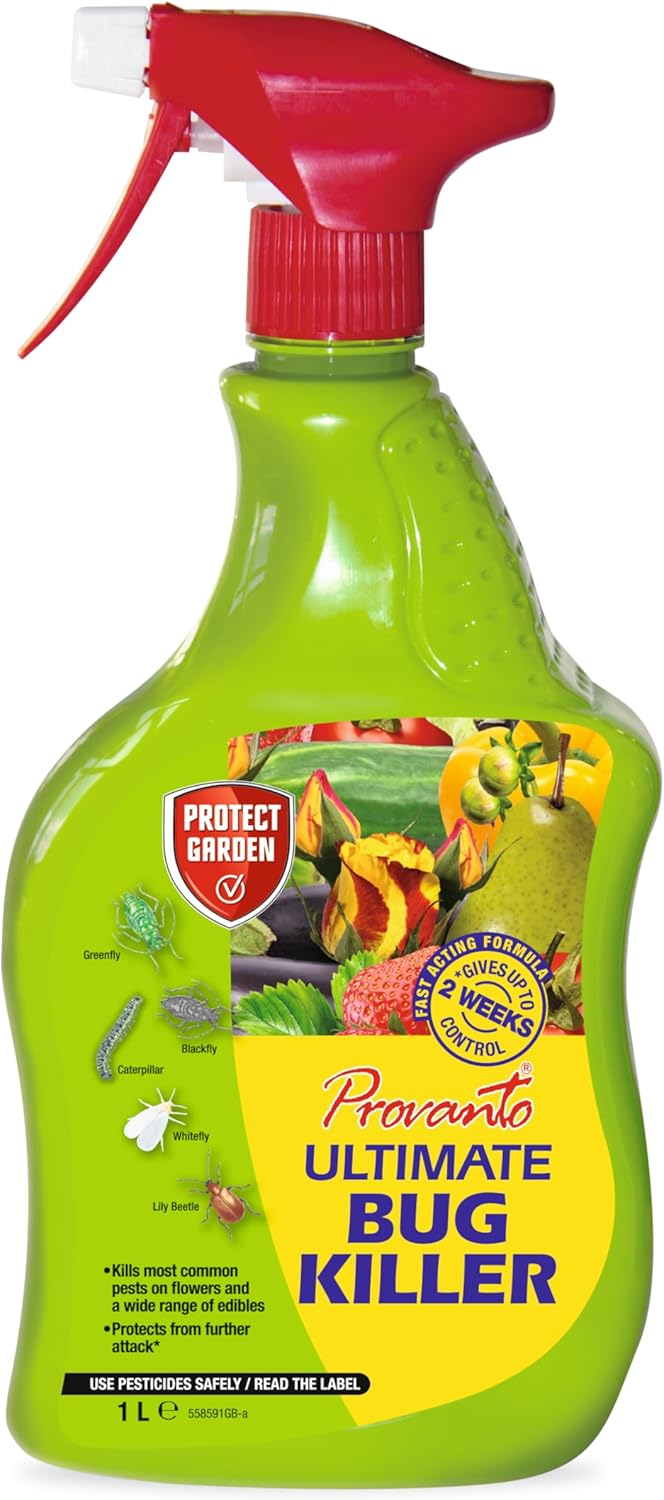
Provanto Ultimate Bug Killer 1L
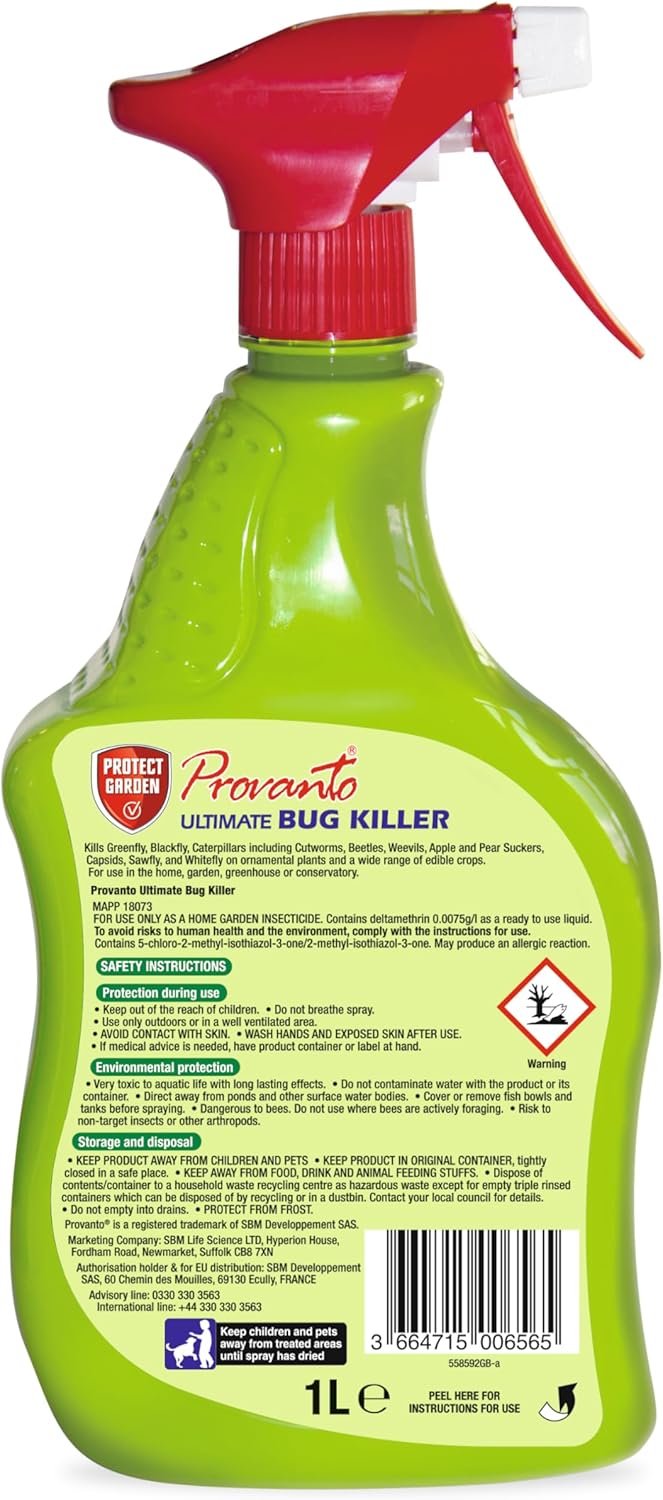
Fast-acting contact insecticide for thrips, mealy bugs, box tree caterpillars, greenfly and more. Ready-to-use narrow-nozzle spray with up to 2 weeks protection on indoor and outdoor plants.
Plants That Don't Tolerate It
This is buried in the reviews but it matters. A verified buyer reported the spray killed their spinach, basil and mint by burning the leaves. Another said it killed two camellia plants. A third warned that while it worked on beetles, it also killed the plant itself if used too heavily.
The Provanto instructions do mention testing on a small leaf area first, and one of the more useful positive reviewers made the same point: let treated plants dry for a few days away from direct sunlight to avoid leaf burn, and be aware some species just can't tolerate the active ingredient.
Plants reviewers flag as sensitive: camellias, mint, basil, spinach, and certain young or delicate indoor species. If you've got expensive or mature ornamentals you care about, spray a single leaf, wait 48 hours, and only commit to a full application if it looks fine. It's a £5.56 bottle, not worth losing a plant that took two years to grow in.
UK Weather, Bees And The Two-Week Protection Claim
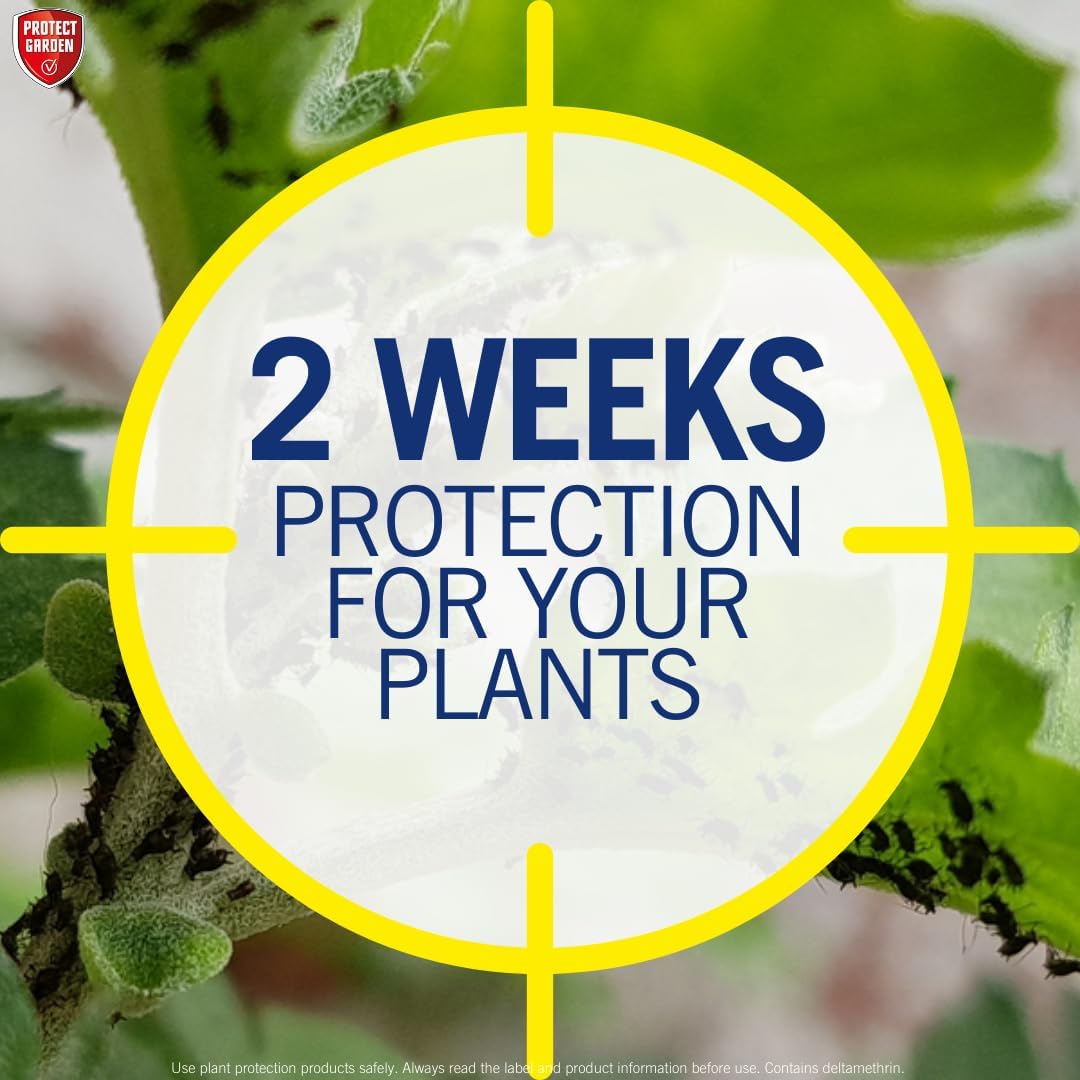
Provanto markets up to two weeks of protection. In practice, UK reviewers report something closer to one week, sometimes less. That's consistent with most contact insecticides: rain washes residue off leaves, UV breaks it down, and new pests fly in. A British summer with four downpours in a fortnight will eat that protection window fast.
A few reviewer tips worth borrowing. First, spray in the evening. This is partly a chemistry thing (residue dries before dew washes it off overnight) and partly a bee thing. As one reviewer pointed out, bees are still foraging in daytime and any contact insecticide will affect them if sprayed directly. Evening application gives bees a head start and lets the residue settle. Second, wear a mask and gloves, especially indoors. One asthmatic reviewer said the mist reached their chest, and another noted the chemical smell is strong enough to justify a mask even at the dilution rate. It's a potent chemical, treat it like one. Third, reapply after any significant rain outdoors, and again after about a week regardless.
For UK clay-soil gardens where the usual culprits are slugs, box moth and greenfly, this spray is most useful on the flying and leaf-sitting pests. It won't do anything for slugs, despite one confused review claiming it did. That's almost certainly survivorship bias about slugs moving on for unrelated reasons.
The Bottle Itself Has Some Real Quality-Control Issues
Setting the spray's effectiveness aside, there are three packaging complaints that turn up enough to flag.
First, the handle. One reviewer reported the trigger handle broke off on first use. It's not a dominant complaint but it's not a one-off either, and given these bottles can sit in sheds for a season before being used, the plastic isn't doing itself favours.
Second, the cap. A middle-aged reviewer said they simply couldn't open the safety cap and injured their hand and wrist trying. Safety caps on a concentrated insecticide are non-negotiable, but the execution on this bottle has drawn repeated complaints. Worth knowing if you've got grip-strength issues.
Third, and this one's more serious: multiple reviewers have reported bottles arriving with broken seals and chemical leaking from the cap. One said they returned two bottles in a row both with broken seals. Provanto's manufacturer has reassured some buyers that the bottles don't require a tamper seal at all, which is either reassuring or concerning depending on how you read it. If your bottle arrives damp or leaky, return it and expect a replacement, not a refund.
How It Stacks Up Against Natural Alternatives

Several reviewers mentioned coming to Provanto after losing patience with natural alternatives, usually neem oil or soapy water. The consistent report: neem works but needs repeat applications and often doesn't fully clear an entrenched infestation. Soapy water can knock back aphids but doesn't kill eggs. One reviewer put it plainly: neem is organic and kinder but takes multiple tries; Provanto eradicated outbreaks in one spray.
If you're trying to keep a garden organic or edible-crop-focused, that's a real trade-off. Provanto is a synthetic contact insecticide. It's not bee-safe during application, it can burn sensitive plants, and you need to observe the harvest interval on edibles (check the label for the specific crop you're spraying). If you're happy with chemical intervention for a serious indoor pest problem that natural options haven't fixed, this is a reasonable place to land. If you're committed to organic, stick with neem and accept the repeat applications. If that's you, the ready-to-use SB Plant Invigorator is the usual organic-leaning alternative - sold as biodegradable with no harvest interval on edibles, and listing aphids, whitefly, spider mite and mealybug on the label - though expect the same repeat-application routine the neem reviewers describe.
Who This £5.56 Bottle Actually Makes Sense For
The clearest-cut case for buying Provanto Ultimate Bug Killer is indoor and greenhouse use on thrips, mealy bugs, whitefly, fungus gnats and spider mites, plus outdoor use on box tree caterpillars, rose greenfly and small localised infestations on ornamentals. These are exactly the scenarios where reviewer praise is strongest and the five-star pile is deepest.
It's a harder sell if your main problem is aphids on mature outdoor plants, if you grow a lot of sensitive crops like basil or spinach, or if you garden with bee-friendly values and won't apply synthetic contact insecticides. And if you're ordering online rather than buying in store, check the bottle on arrival, don't just shove it in the shed.
At £5.56 for a 1L ready-to-use spray with the narrow nozzle several reviewers praised for targeted application, it sits at the cheaper end of effective contact insecticides. For a persistent indoor pest problem that's already cost you a few plants, that's an easy buy. For a vague hope that it'll fix everything crawling in your garden, you'll be one of the angry reviewers.
Provanto Ultimate Bug Killer 1L
Fast-acting contact insecticide for thrips, mealy bugs, box tree caterpillars, greenfly and more. Ready-to-use narrow-nozzle spray with up to 2 weeks protection on indoor and outdoor plants.