
Ratchet Secateurs for Arthritic Hands UK: Why the Unlock Step Decides It
We earn commission from qualifying Amazon purchases. It costs you nothing and does not affect what we recommend.
The same tool that lets one arthritis sufferer prune roses with almost no effort leaves another unable to unlock the handles at all. Here is who the GRUNTEK Kakadu ratchet secateurs actually suit, and who ends up returning them.
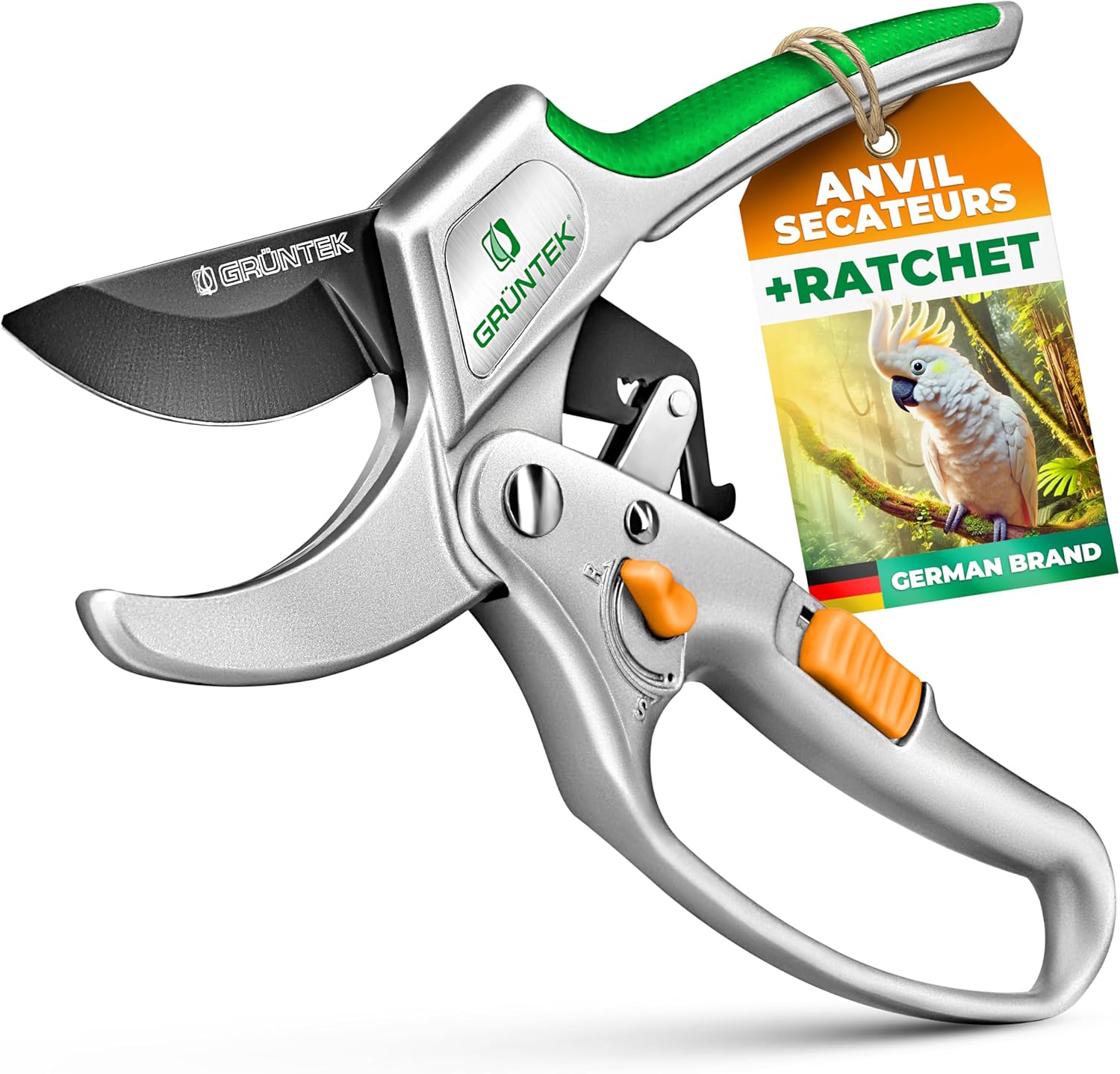
Buy a pair of these on the strength of the listing and you would expect one thing above all else: that weak or arthritic hands can actually work them. That single promise is where the GRUNTEK Kakadu splits its owners straight down the middle. Some arthritis sufferers call them the easiest secateurs they have ever picked up. Others could not even unlock the handles without asking someone else to do it for them.
Across the 100 most recent UK reviews the average sits at 3.66 stars, and the one-star pile is unusually tall at 22 percent. Read through those one-stars and a pattern shows up fast: a good number are people who bought the tool for exactly the reason it is marketed, then found they could not operate it. So before you add a pair to your basket, it is worth knowing which hands these suit and which ones they defeat.
The Locking Catch Some Buyers Never Got Past
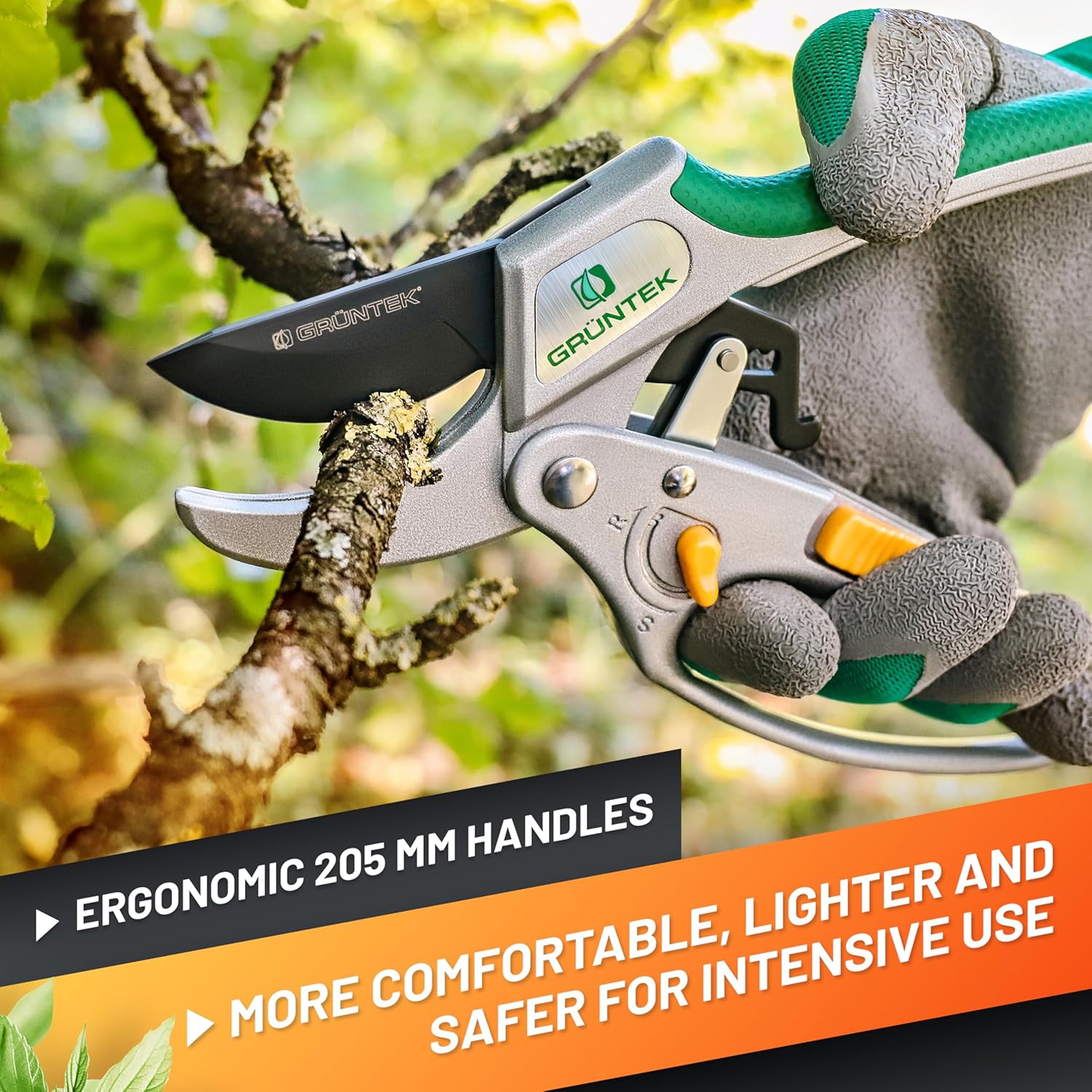
The Kakadu ships locked, and there is a slider on the side you press to release the blade before first use. On paper that is a safety feature. In practice it is the first hurdle, and for a slice of buyers it is the last thing they ever managed with the tool.
One buyer who left a single star put it bluntly: "I couldn't unlock the handles. They are advertised as easy use for weak grip. They are certainly not." A reviewer called Helen, also one star, describes the same wall: "I couldn't open them. I had to get help. He opened the m ok then locked and showed me how to open by pressing the slider on both sides. I couldn't." (sic)
What makes this worth flagging is that the problem is not confined to the low ratings. Gladys left five stars and still wrote: "I couldn't unlock it until I had completed removed the relevant slide and subsequently left it unlocked. Perhaps I'm too weak but it did say suitable for arthritis sufferers which I am not." (sic) Another five-star owner, anne maclean, summed up the missing piece: "This is a good buy but probably could do with instruction to get started."
The takeaway is that the slider mechanism needs pressing on both sides, and once you know that, several people find it manageable. But if your grip is weak enough that pinching both sides at once is hard, this is the step that will send the pair back. It is the single most important thing to test in the first five minutes. Check the current price and returns policy on Amazon before committing if reduced grip is your main concern.
Hand Size Matters as Much as Grip Strength
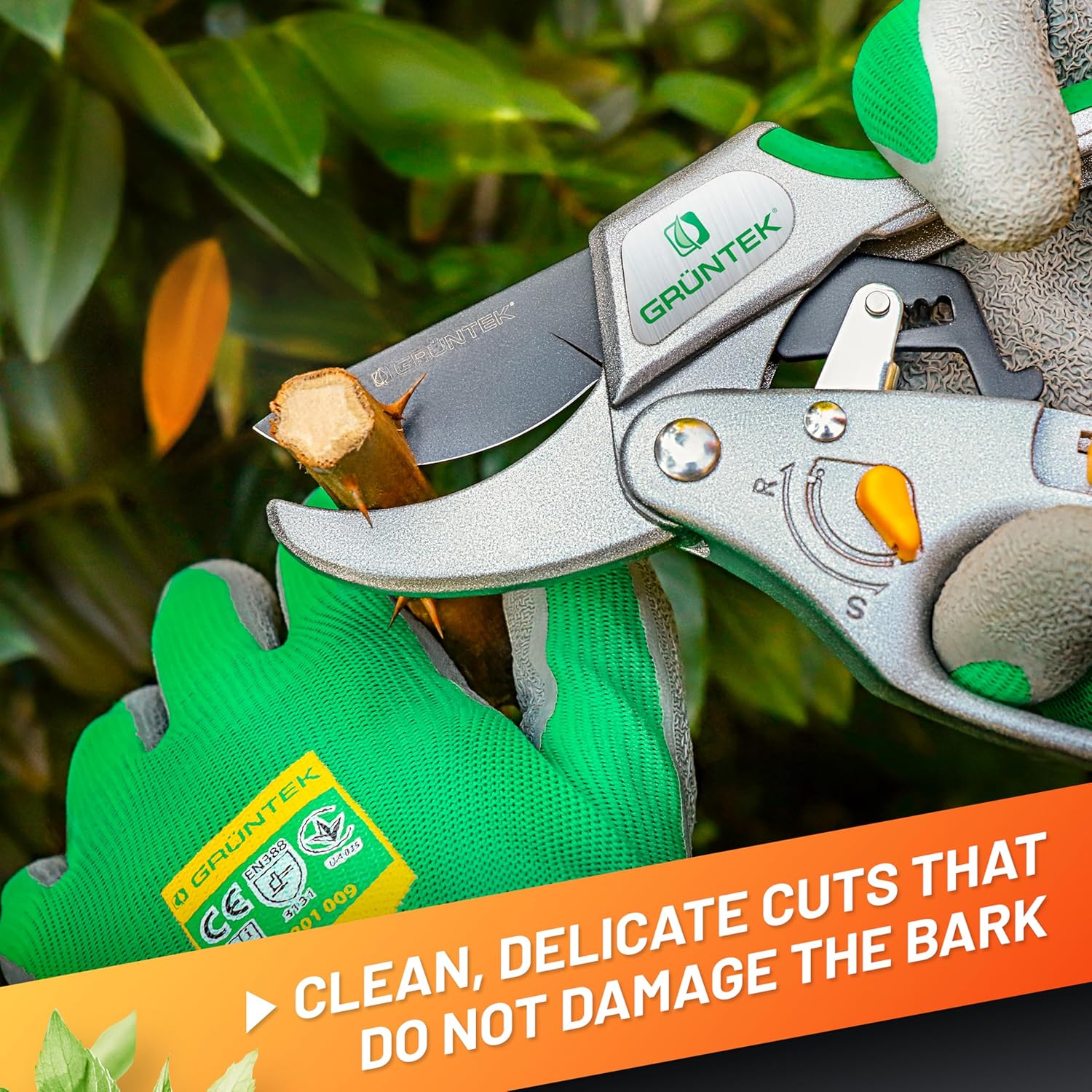
There is a second accessibility issue the marketing does not mention, and it comes up almost as often as the unlock complaint: hand size. These are physically large secateurs, and to open the jaws fully you often have to spread the handles wider than a small hand can comfortably reach.
kath wolstencroft, two stars, was scathing: "the secateurs will only work properly if you have the hands of a giant." catitudes, also two stars, measured it: "the absolute maximum width to which I can open these infernal devices is 15 mm," which she felt made a mockery of the product's cutting claim. Even fans concede the point. anne mcdonald gave five stars yet added: "Only problem my hands are small and I find them hard to use properly." dcS, another five-star buyer, noted the handles "swing open a bit too far for my small hand size." David Marsh, who rated them highly for pruning up a ladder, still warned that "someone with really small hands might well have difficulty getting the jaws open enough to tackle thicker wood."
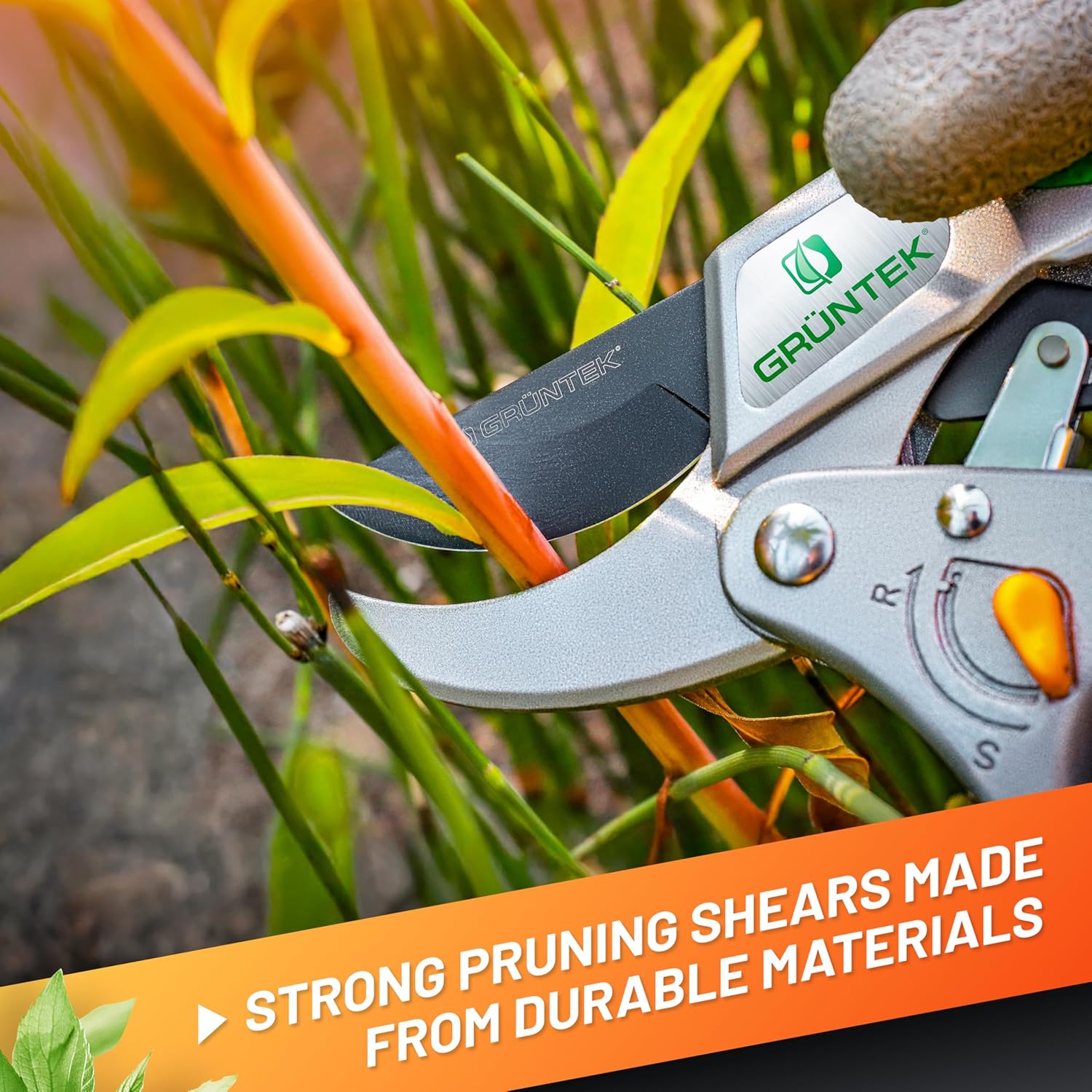
Confusingly, it is not universal. Hilary, five stars, called them "Excellent for smaller hands." The pattern that emerges is less about hands being small and more about the reach needed to open the handles for the thickest cuts. For thin stems the spread is modest. For anything near that 24 mm rating you need to open the jaws wide, and that is where a smaller hand runs out of span. If you have both weak grip and small hands, this is a tool to try in person, not buy on faith.
GRUNTEK Kakadu Ratchet Secateurs - 24 mm Cutting Diameter
Ratchet pruning shears with an on/off swivel mode and SK5 steel blade, built to ease cutting effort for weak or arthritic hands. Test the unlock and a real cut inside the return window.
Half the Review Pool Says the Accessibility Claim Holds
After all that, it would be easy to write the accessibility claim off entirely. That would be unfair to the other half of the review pool, because a large group of arthritis sufferers rate these exactly as the listing promises.
SSJ, five stars, is the clearest endorsement: "Excellent secateurs. Do the job perfectly, especially with them having a ratchet, as I have arthritic fingers now. I would recommend them to anyone who has arthritis in the hands or fingers, or if the strength in your hands is less than it was." A Kindle Customer agreed: "These secateurs are amazing especially if you have arthritis. Ergonomically easy to use." Somerset kept it short: "I have Osteoarthritis and this helps with pruning." JennyB found them "ideal for my rather arthritic hands and very easy cutters of quite substantial branches." Kate, who rated them four stars, bought them for the same reason: "Wanted to try it as I have arthritic hands. Easy to use and efficient."
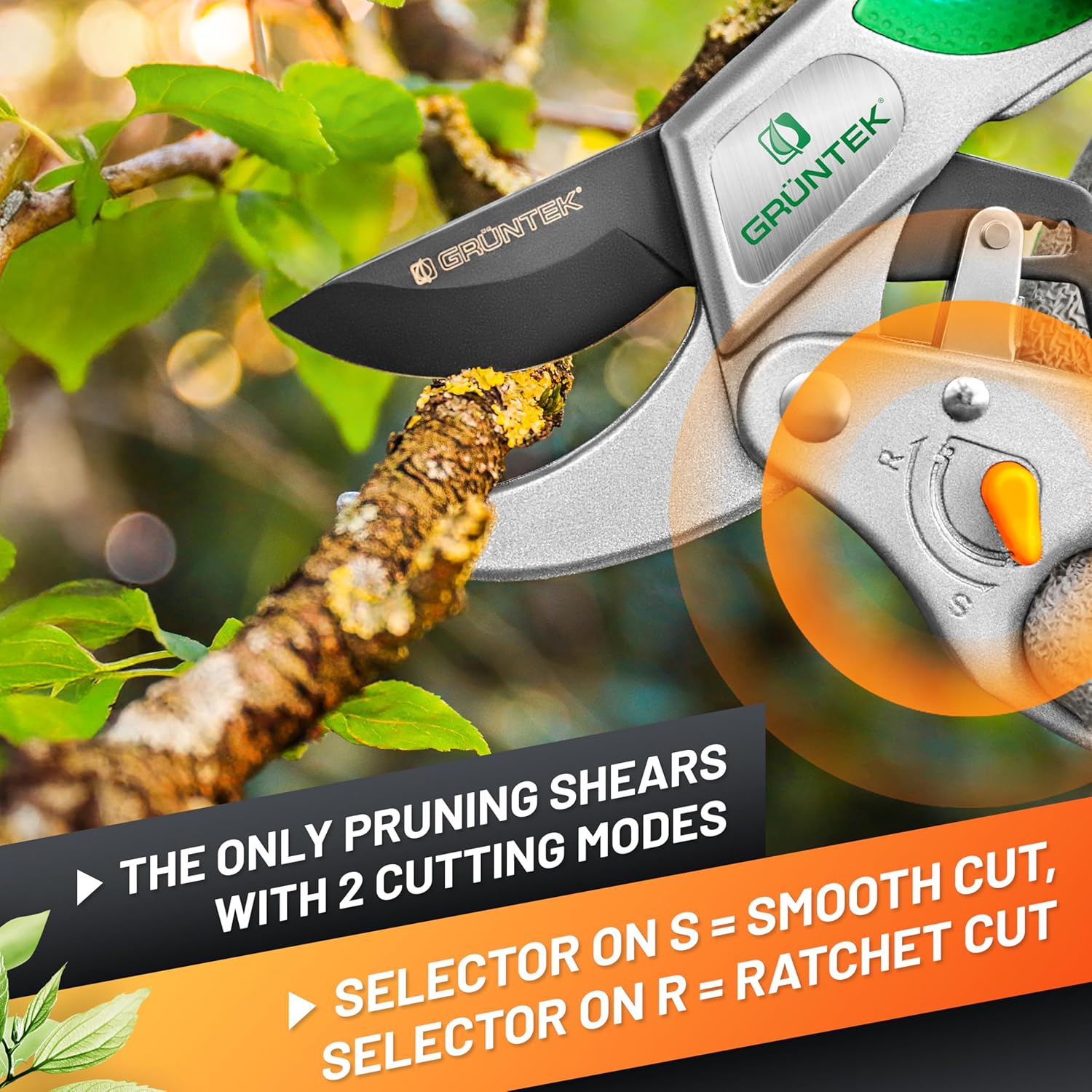
The mechanism doing the work here is the ratchet itself. Instead of forcing a branch through in one squeeze, you clamp, release, and squeeze again, and the tool holds its progress between each pump. For a hand that cannot generate one strong closing force, that stepped action is the whole point. When the tool functions as designed, it delivers on the arthritis promise for a lot of people. The uncomfortable truth is that whether it works for you seems to depend heavily on the specific unit you receive and on getting past that unlock step first.
The Ratchet Action: Effortless Until the Switch Slips
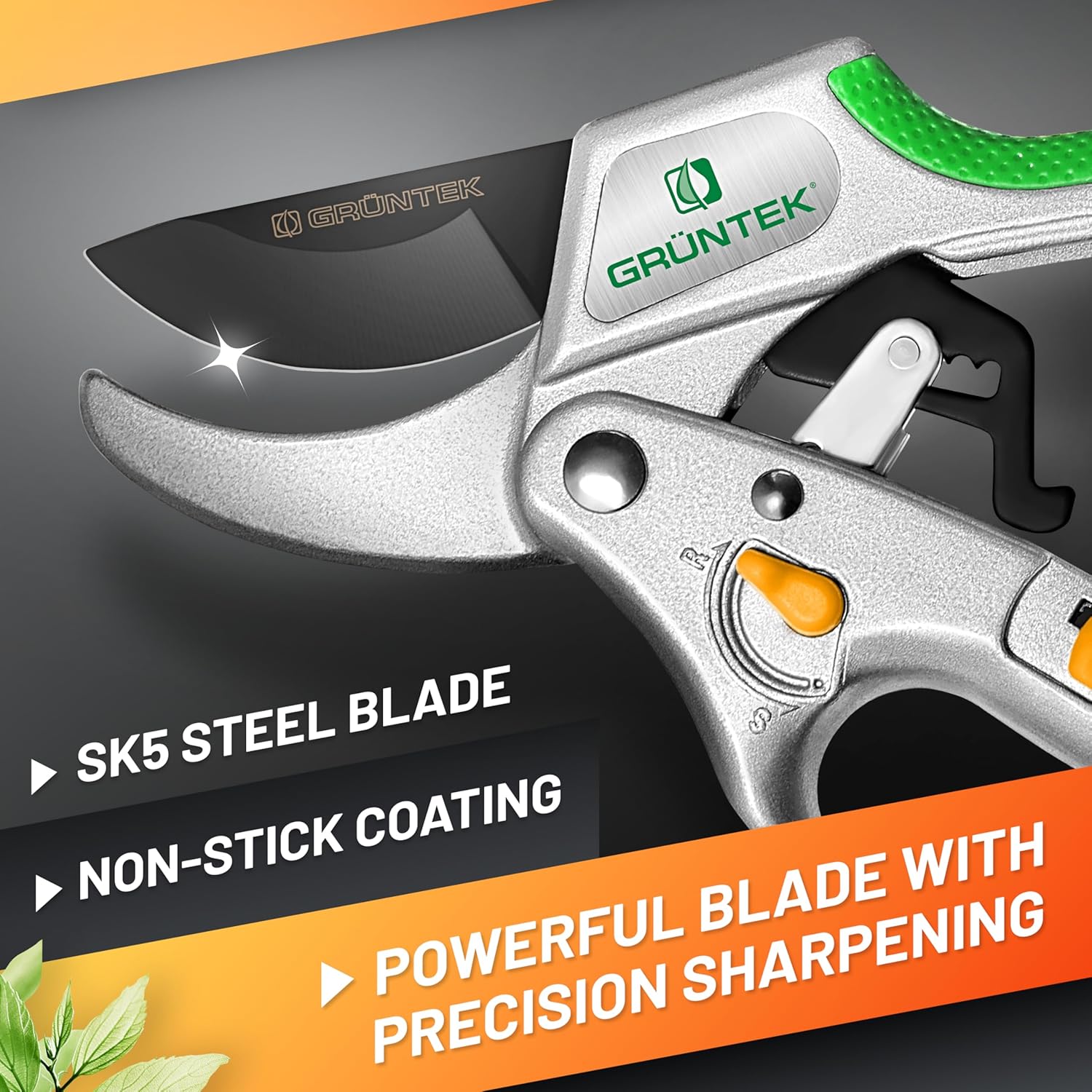
The Kakadu has an on/off ratchet mode. Flick the switch to S and it cuts like a standard bypass secateur for quick snipping; flick it the other way and the ratchet engages for thick or dry wood. When it behaves, buyers love the flexibility. Chris Turner, five stars, said they "cut nicely with little effort, perfect for all types of pruning and snipping small branches," and singled out the safety lock as "a nice touch."
The recurring gripe is that the mode switch does not stay put. Gerard, who still gave five stars, noticed early on that "sometimes the ratchet catches and it does not reopen as expected during use." alison bowen, two stars, was harsher: "The ratchet let's you down quite often which really is a real inconvenience. When they work that are great but they are unreliable." (sic) The most upvoted review in the recent sample, from BaconLover with 22 helpful votes, pins the fault precisely: "The ratchet mechanism randomly turns itself on whilst in the S position (locked, no ratchet), and for other times, if it gets even remotely knocked off S... ratchet goes full on."
So the ratchet is the feature people buy these for, and it is also the feature that generates the loudest complaints when a unit is off. For light seasonal pruning that switch slipping is an annoyance. For someone relying on the ratchet because their grip cannot manage a standard cut, an unreliable switch undermines the entire reason to own the tool.
The Spring Is the Part That Fails
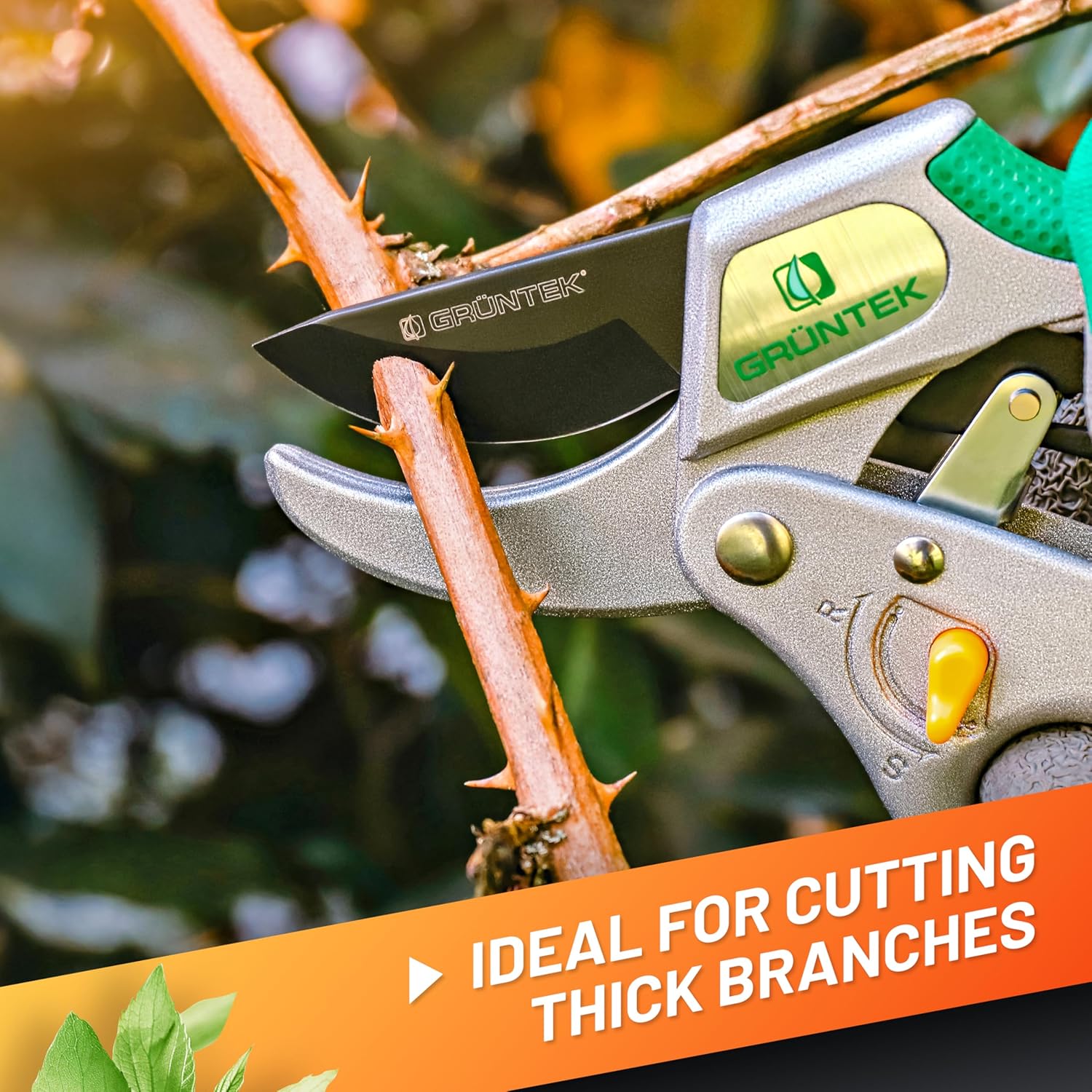
If you read only the durability complaints, one component comes up more than any other: the return spring that pushes the handles back open after each cut. It sits recessed in the handle, and a steady stream of reviews describe it breaking, popping out, or getting mangled in the mechanism.
BaconLover's much-upvoted review ends with a two-word update: "Already broken, spring jumped out." RAPALLA, three stars, diagnosed it calmly: "The recessed spring seems to be a weak point in what would otherwise be a great garden tool." Karl R gave a fair long-term account, praising them for two years before adding: "The spring broke down recently and it seems like a premature fault." Even a four-star owner, Devonshire Browne, hit a related failure: the "plastic ratchet adjustment switch... broke first," though he noted you are at least "left with functioning but non-ratchet cutters."
This is the weak spot to go in expecting. Springs do fail on cheaper ratchet secateurs across the market, and GRUNTEK's has a track record of doing so, sometimes within months. Several buyers had the manufacturer resolve it, others found replacement springs hard to source. If you want a tool to last a decade of heavy use, this is not a safe bet. If you want an affordable pair that makes pruning possible now and you can accept it may need replacing, the maths looks different. Worth weighing the low outlay against the durability risk when you check today's price on Amazon.
So Should You Buy Them?
The GRUNTEK Kakadu is a real answer for reduced grip strength, but a conditional one. It suits you if you can manage the two-sided slider to unlock it, if your hands have the span to open the handles for thicker branches, and if you treat it as an affordable helper rather than a lifetime tool. Under those conditions, a large share of arthritis sufferers rate it five stars and mean it.
Steer clear if your grip is weak enough that pinching both sides of the lock at once is a struggle, if you have small hands and mostly cut thicker wood, or if you need something that will shrug off years of daily abuse without the spring giving out. The 22 percent one-star rate is not noise; it is largely those three groups discovering the tool does not fit them after purchase.
At the price these sell for, the low-risk approach is to buy a pair, test the unlock and a few real cuts within the return window, and send them back without hesitation if the mechanism fights you. For everyone the tool does fit, it makes pruning possible again, which is exactly what a ratchet secateur for arthritic hands is supposed to do.
GRUNTEK Kakadu Ratchet Secateurs - 24 mm Cutting Diameter
Ratchet pruning shears with an on/off swivel mode and SK5 steel blade, built to ease cutting effort for weak or arthritic hands. Test the unlock and a real cut inside the return window.