
Smidge Insect Repellent Cream Review: Does Scotland's Favourite Midge Defence Work Everywhere Else?
We earn commission from qualifying Amazon purchases. It costs you nothing and does not affect what we recommend.
A windfarm crew in the remote Highlands and a horse fly in a Greek valley that visibly changed its mind about biting: Smidge reviews come from memorable places. The pattern in them is geographic. This picaridin cream is brilliant against British biters, and more of a coin toss against tropical mosquitoes.
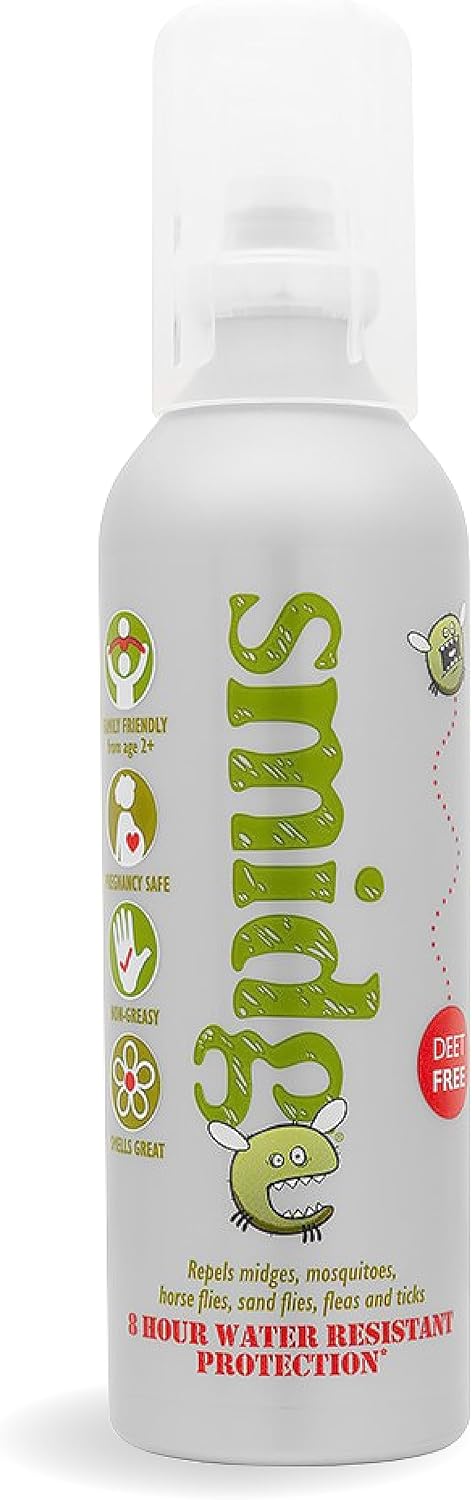
Scotland has an unofficial national pest and a whole cottage industry devoted to fending it off. Among the head nets and coils, one product gets recommended by name, by locals, to strangers: Smidge. The 75ml aluminium pump bottle holds a milky picaridin lotion promising up to 8 hours of water and sweat resistant protection against midges, mosquitoes, horse flies, sand flies, fleas and ticks, for £10.94.
That Highland campers rate it is settled. Less settled is whether the same bottle makes sense for the rest of us: the gardener doing the evening watering round, or the family flying to Greece in August. The recent reviews answer by location, so this review is organised the same way, use by use, from the back garden to the Maldives, including the places where Smidge gets beaten.
First Things First: Picaridin, Not DEET
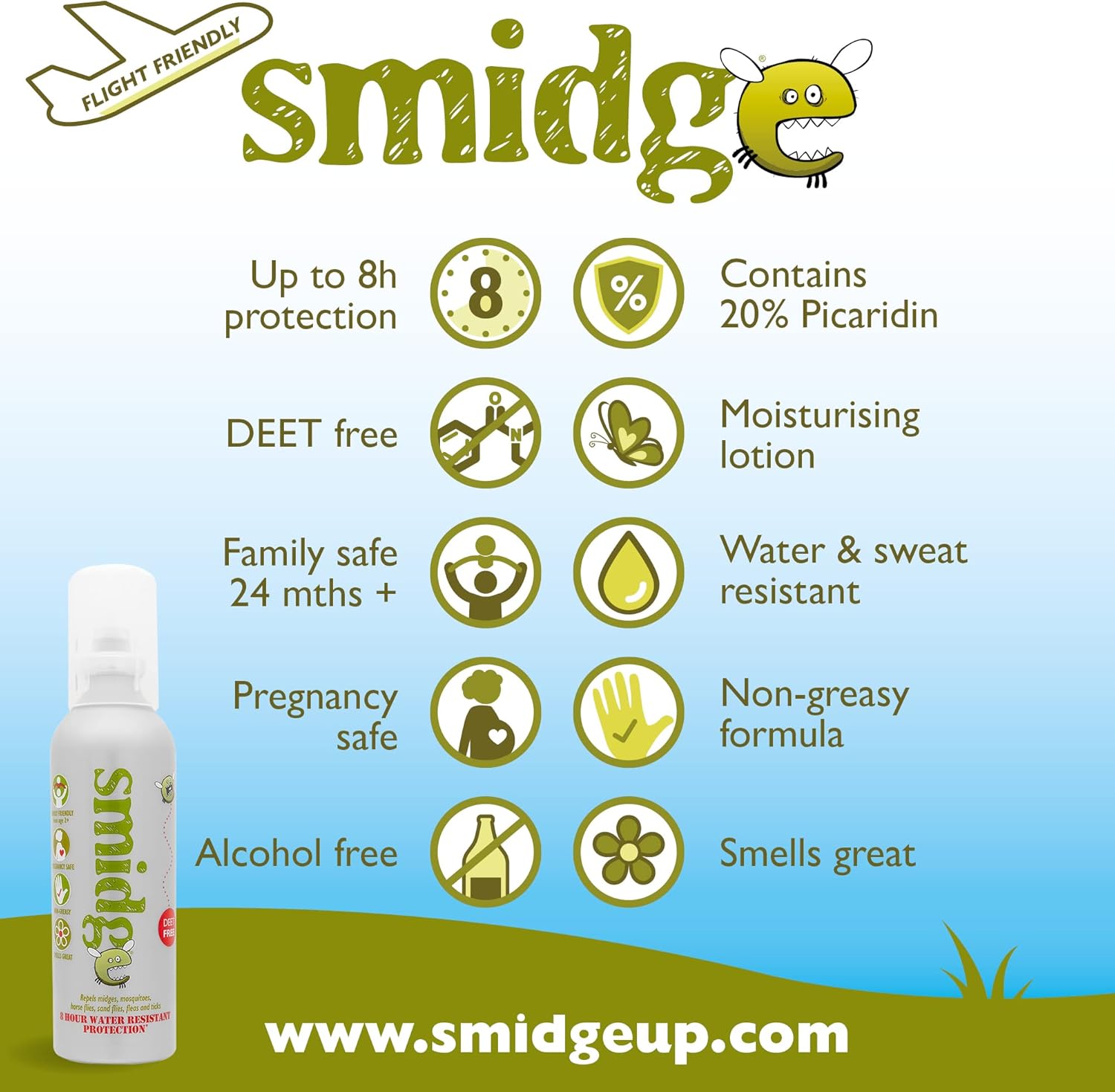
Smidge is a 20% picaridin lotion in a 75ml aluminium pump bottle. Picaridin (also known as Saltidin) is recommended by the WHO and Public Health England for biting-insect protection, and the label leans into what's absent: no DEET, no alcohol. The listing claims up to 8 hours of water and sweat resistant protection per application, says it is safe for adults, children over 30 months and pregnant women, and the same formula targets midges, mosquitoes, horse flies, sand flies, fleas and ticks.
In the hand it behaves more like skincare than bug spray. Rachelle Silver, a 5-star buyer who says she gets "bitten by anything" every summer, describes application as "like putting a moisturising cream on after a bath or a shower. It doesn’t sting or smell of the strong, it isn’t sticky and it lasts 7 1/2 to 8 hours" (sic). A 4-star buyer compares the format favourably with the competition: "No horrible choking smell/droplets like others, pump spray rather than aerosol so much less waste too". Michelle O'Donnell adds "Great for sensitive skin. Really works. Low perfume." The scent comes up constantly across the positive reviews, which is not something you can say about many repellents.
Midge Country Is the Home Fixture
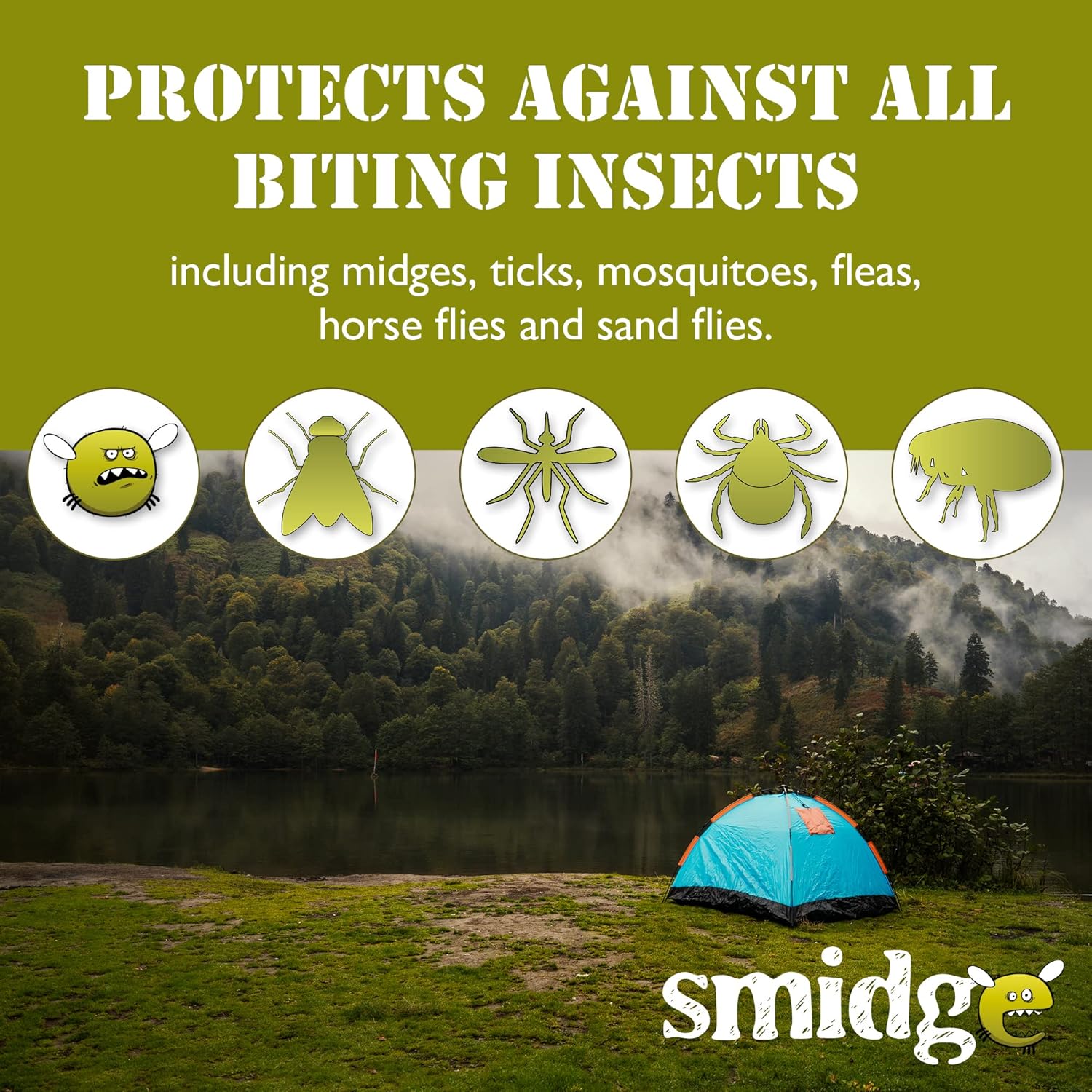
Smidge's reputation was made in the Highlands, and the Scottish reviews read like local folklore. The most upvoted review in the recent hundred comes from Michael Stevenson, who used it every day while overseeing windfarm construction in remote parts of the Highlands. His crew had tried face-covering veils alongside other repellents "without success" until the locals intervened: "It was only when the local inhabitants recommended this product that we tried its effectiveness." His next line: "The local villagers were not wrong!" He calls it "100% effective against all mosquitoes and midges", and his only operational note is that it "does need a second application after a full 8-9 hours of full protection", which is about as gentle as criticism gets.
Mr. J W, who does a lot of hillwalking in the northwest "where the Scottish midge are known to eat a whole haggis in less than 3 minutes", had tried the folk remedy first: "I've tried neat Islay whisky on the face, but the midges seem to find this similar to a mating ritual - liquid Tinder." Smidge, in his words, "does the job". Matt C keeps it practical: "This stuff is a must if you're visiting the West of Scotland. Keeps the midges at bay, and isn't very greasy." And a 4-star reviewer back from the Highlands confirmed the weatherproofing from experience: it "held up well even when I started to sweat or got caught in a drizzle".
It is not unanimous, even on home turf. Adam's one-star review was filed "from Scotland, in a midge infested car after abandoning camp setup", and Mrs F. came home convinced the cream had the opposite effect: "It didn't repel the midges, if anything, it seems to have attracted them." A few more recent one-stars tell the same got-bitten-anyway story. Keep that minority report in mind; no repellent in this review pile works for absolutely everyone.
Smidge Insect Repellent Cream (75ml)
20% picaridin protection against midges, mosquitoes, horse flies and ticks: up to 8 hours, water and sweat resistant, kind to skin and family safe from 30 months.
Back Garden Bites: The Dusk Watering Crowd
You don't need a loch view to get chewed. A still summer evening in a UK garden can produce a respectable bite count of its own, and a clear thread of buyers keeps Smidge by the back door for exactly that.
Mike is the tidiest example: "I had previously used it during photography shoots on the moors, now I know it also works for me when I'm in the garden. Really pleased to say I'm no longer getting bites when I work outside." Honey puts it more bluntly: "at least I can go out again after putting it on". And one 5-star buyer who avoids DEET products because of the smell signed off with "I'm a happy gardener again!" after two bite-free days in a summer that had been, in their words, "itching to blazer" (sic).
PPM calls it an "Essential bit of kit for berry picking season, but not sure if it keeps horseflies away as well as it repels midgies, more testing required!" Others are surer on the horsefly question: Jez200 is "constantly bitten by midges and horseflies" and reports that "This does a great job and no nasty chemicals".
Evenings are the high-risk shift, and Anne treats Smidge as her curfew pass. She travels extensively by motorhome, says "The little feckers love me and this is my saviour", and "won't go out anywhere after 5pm without it!" She also has a theory about the buyers it fails: "You need to spray it onto your hand and rub it in, not just spray it on." Worth trying before you write off a bottle.
One caution before you garden in your best clothes: Tina's one-star review isn't about bites at all. She compares the milky lotion to bird droppings and says it "leaves stains on your clothes, shoes and garden tiles". Nobody else in the recent hundred mentions staining, so it may come down to how much you apply and what you brush against, but consider yourself told.
Long Days Outside, From Hill Paths to Search and Rescue
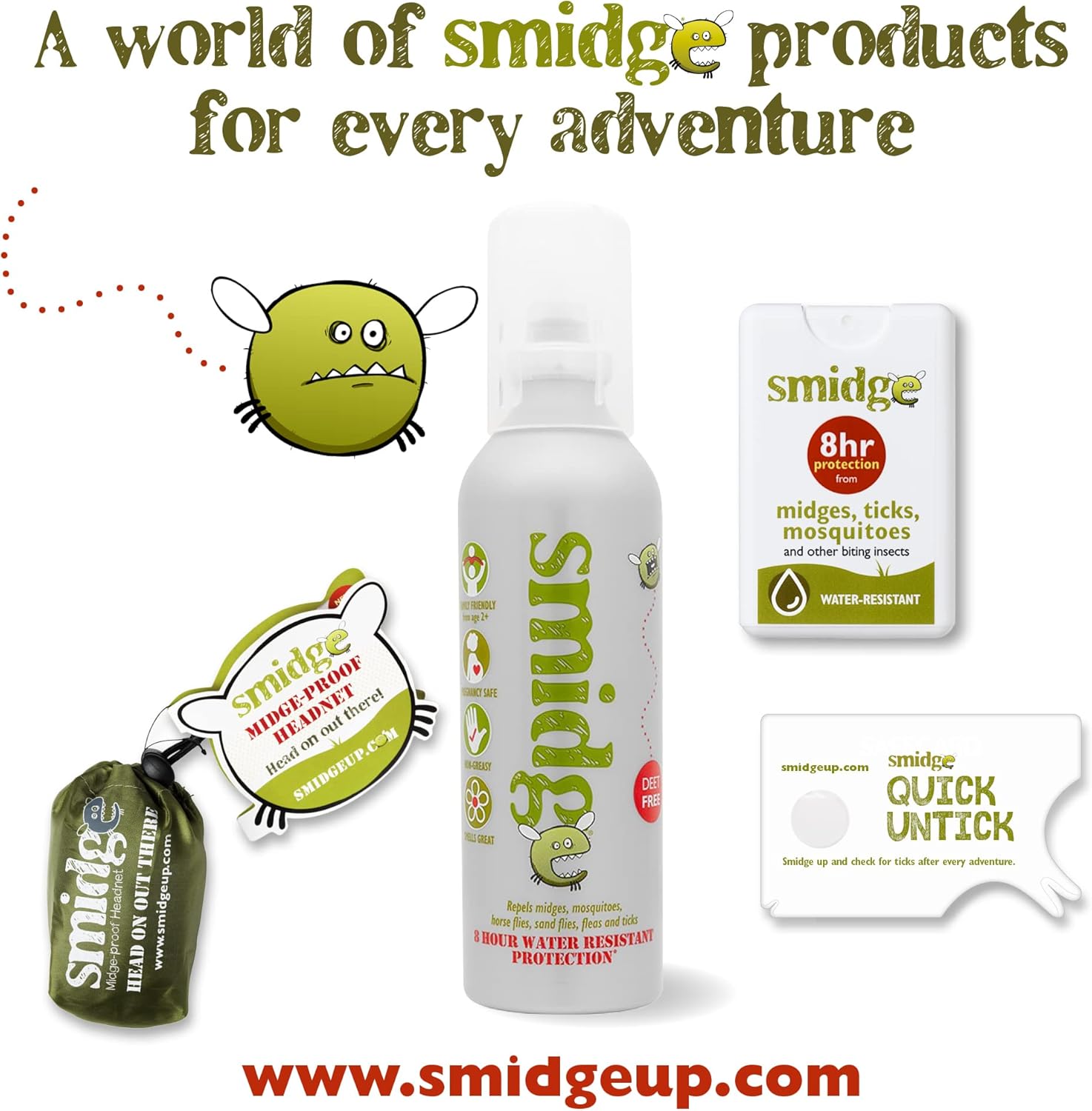
The strongest endorsements come from people who are outdoors for work rather than fun. Englishbloke writes: "I’m search and rescue. I’ve spent days waist deep in grasses and bramble surrounded by flies with no bites. Great stuff." Alongside Michael Stevenson's windfarm crew, that is two jobs where a repellent failing has real consequences, and both settled on Smidge.
For leisure hikers and campers the reports are positive with useful footnotes, and Arran Brough's 5-star review is the best planning document in the sample. On a Scotland trip where he knew he would be facing swarms, he sat in "literal clouds of midges" and "only got a few bites on areas I’d covered". Two caveats come from the same review: the up-to-8-hours claim didn't hold for him ("I found I needed to reapply after a few hours"), and a 75ml bottle empties fast at that rate ("it can run out quickly if you’re relying on it alone"). His fix was pairing it with a midge net for his face.
One hiker whose review gathered nine helpful votes praises the packability, "small enough to fit in a backpack or pocket", while NC500, a 5-star camper, calls it a must for tent trips and adds two details you won't find on the label: repelled midges "will fly up close to you so be warned", and "put a light layer on your head too as the wee beasties will try to bite you on the scalp". The same reviewer recommends checking the Smidge forecast online before a UK trip, which is the kind of tip you only get from someone who has stood in a swarm holding a tent peg.
Abroad Is Where Opinions Split
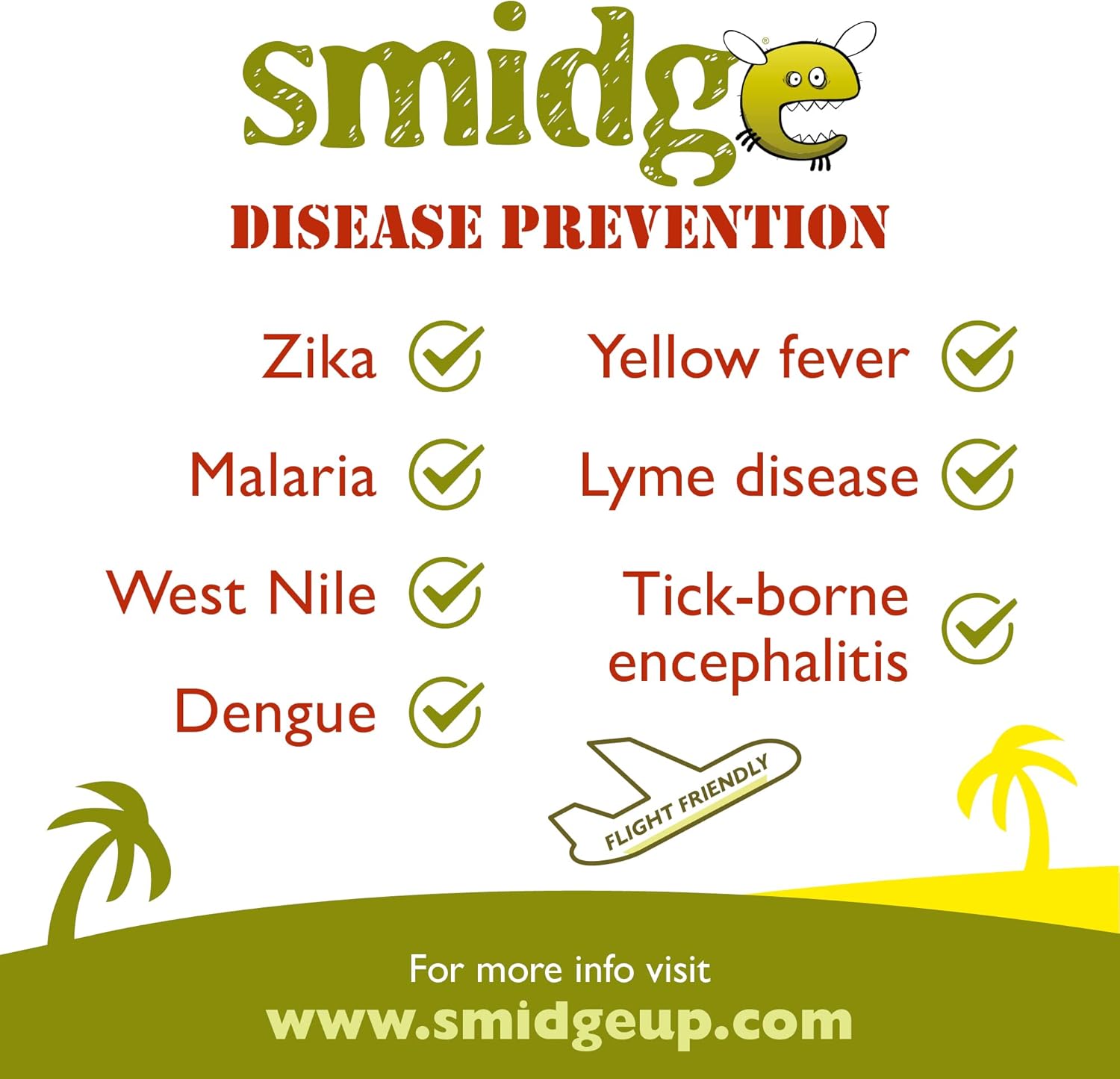
Take it on a European holiday and the odds look good. Tifrap had used Smidge in the Highlands in the past, then packed it for "an idyllic mosquito infested valley in Greece", where "it was the only thing amongst our arsenal of wipes, spirals, candles and deet based sprays that actually worked, at one point I even watched a horse fly change its mind about biting me". Mrs Marianne Russell came back from two weeks in Greece with exactly two bites, picked up on day two "on my back where I hadn't used Smidge. From then on made sure I was covered and no more bites." Word of mouth does a lot of the selling here: one first-time buyer took it to Greece after a stranger in a supermarket queue and then the cashier both vouched for it unprompted, and finished the trip on "only 7 bites this holiday - normally 20-30".
It stretches beyond Europe for some. Amy F spent two weeks in the Maldives watching "everyone else on the island" get "eaten alive using Deet" while she "had three bites over the whole two weeks". Sarah Unsworth: "Used in the everglades and NOT ONE bite!" Hannah Ward, reviewing mid-holiday from Mexico, says it is "Giving me confidence back for being out in the evenings or around trees on holiday".
Then the other column. One buyer "Purchased three bottles for a trip to Bali, applied numerous times and was bitten through it numerous times" and concluded that "DEET is still the most effective". Deborah Winters, who says she always gets "eaten alive in Florida", reports: "It smells amazing but didnt work for me" (sic). A 3-star reviewer wore it "religiously" in Mallorca, "ended up with over 20 painful bites" and is "switching back to trusty Jungle Formula". AloeQueen is more specific about the species: "Didn't protect at all against tiger mosquitos", and the only repellent they have found that works on those contains DEET. Daniel's one-star arrived mid-holiday from Italy, with all four family members "bitten multiple times over the past 2 days".
Wayne's 2-star title sums up the lottery: "Not sure it works for everyone". He counted "close on 100 bites from 2 days". The split in these reports is stark. The same cream that cleared a Greek valley fails completely for some buyers in Bali and Florida and, occasionally, in Scotland itself. If your destination has tiger mosquitoes, the recent reviews lean clearly towards packing DEET as well.
Verdict: First Pick for Britain, Pack a Plan B for the Tropics
The lifetime average stands at 4.5 stars across 10,369 ratings. The most recent hundred run slightly cooler at 4.29, and the shape of that hundred tells you more than the average does: 74 five-star reviews, 13 one-star, and a thin scatter in between. Repellents are binary like that. Of the 13 one-stars, eleven boil down to the same complaint, the bites happened anyway; one is about staining and one arrived damaged in the post. There is no quality-control scandal hiding in the data, just the blunt fact that no repellent suits every body chemistry in every place.
On price, £10.94 for 75ml is not the cheap end of the shelf, and one 4-star buyer says so: "Works but expensive - cheaper alternatives out there that work just as well". That view is outnumbered by buyers for whom nothing else has worked at all. Stephanie says it is "so far its the only one I've found that actually stops me getting bitten" (sic), and Helen calls it "The only one I have tried that has any effect on the wee bitey barstewards".
So, to the question in the title. For British summers the answer is a clear yes: midge country, the garden at dusk, campsites, long days on the hills. It is pleasant enough to wear that you will actually use it, it is safe for children over 30 months and pregnant women, and it is the brand Scots recommend to strangers in supermarket queues. Abroad, the answer is yes for most European trips and a maybe for the tropics: take it for comfort, but if tiger mosquitoes are a known hazard where you are headed, pack a DEET backup too. If a summer of bites is what you are trying to avoid, check the current price here and keep a bottle by the back door.
Smidge Insect Repellent Cream (75ml)
20% picaridin protection against midges, mosquitoes, horse flies and ticks: up to 8 hours, water and sweat resistant, kind to skin and family safe from 30 months.