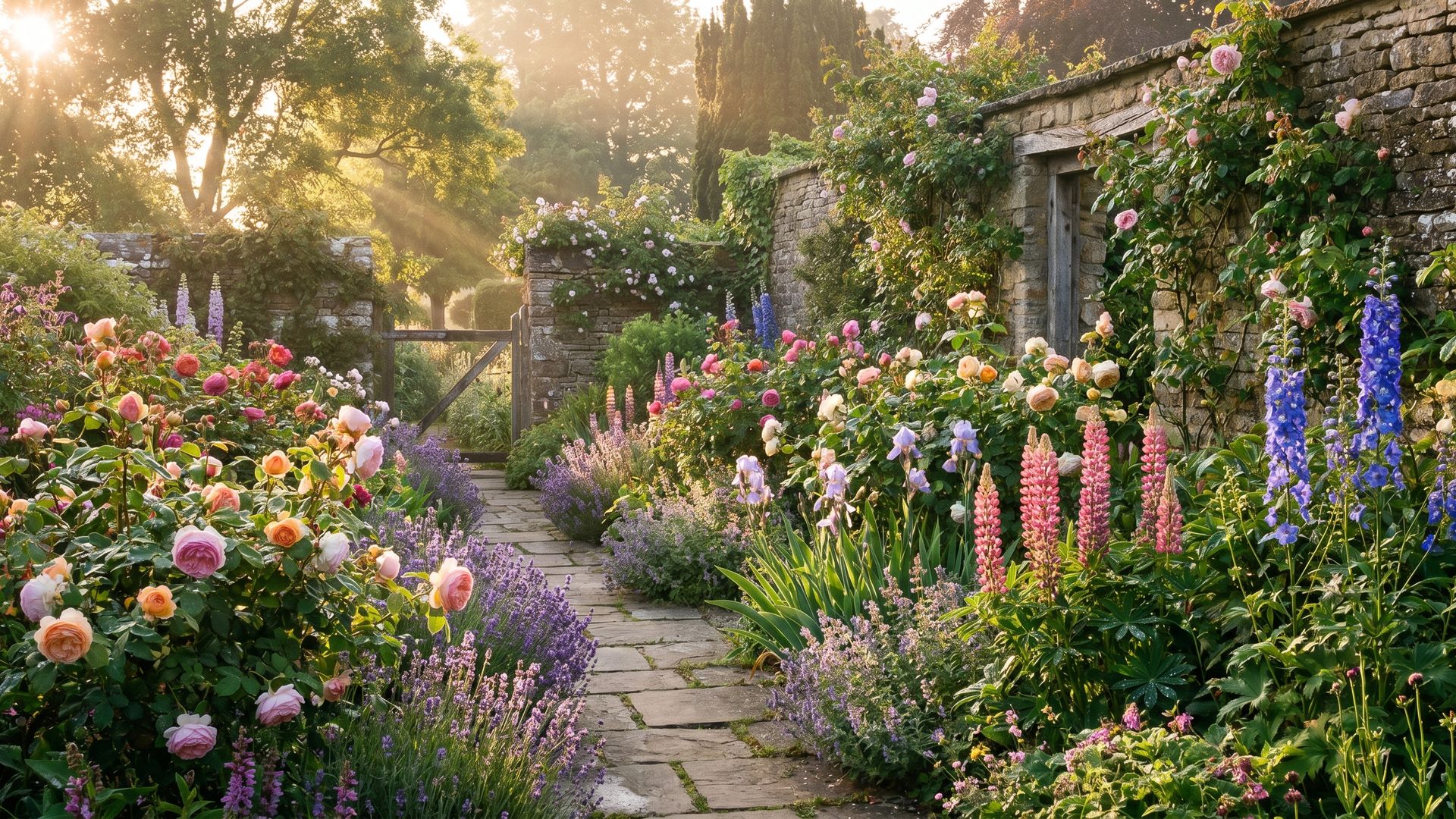
How to Keep Pots Watered While on Holiday in the UK
Published 5 August 2026
Going away and worried your containers will fry? This UK guide matches how long you are away and how hot it will be to the right method, from a free deep soak and shade through DIY drippers and wicking to a drip kit on a timer.
We earn commission from qualifying Amazon purchases. It costs you nothing and does not affect what we recommend.
Quick Answer
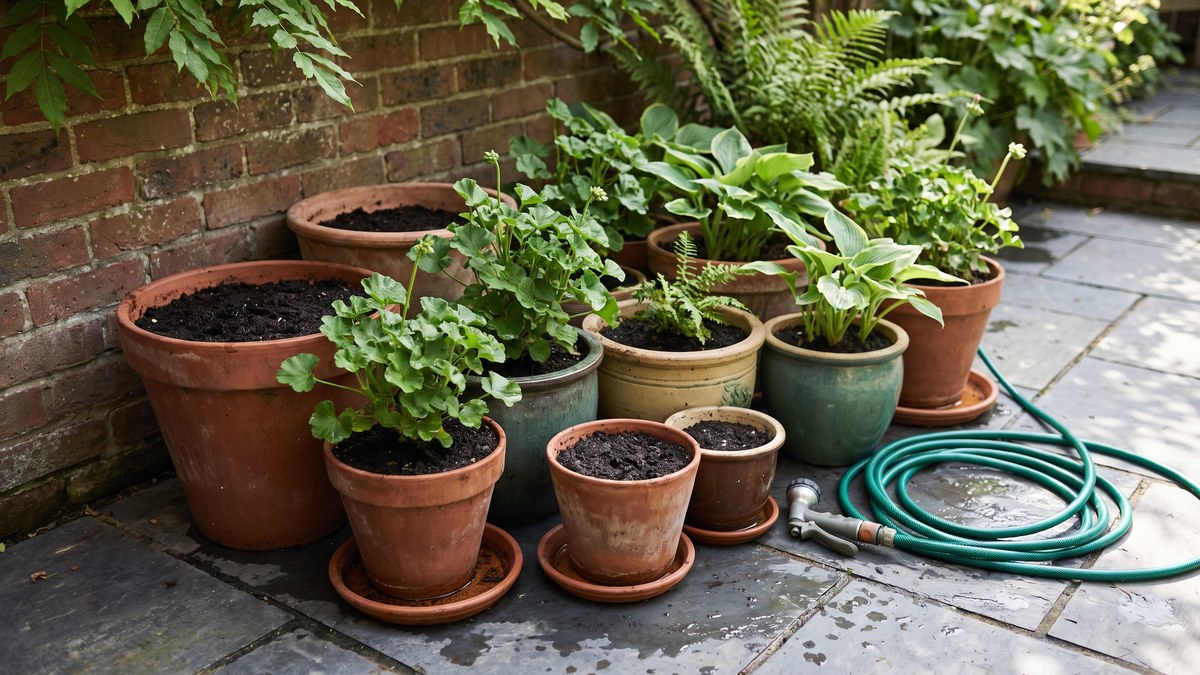
Give every pot a long, deep soak, then group them together in shade out of the wind so they dry more slowly. For a long weekend that is usually enough on its own, while for a week or more you add a self-watering method matched to how long you are away, such as bottle drippers, wicking from a reservoir, or ceramic cones. For two to three weeks or a heatwave, a drip kit on a battery tap timer is the only truly reliable answer, backed up by a neighbour if you can.
- How Long Can Potted Plants Survive Without Water?
- Give Every Pot a Deep Soak Before You Leave
- Group Pots in Shade and Slow the Drying
- DIY and Low-Cost Ways to Water Pots While Away
- Self-Watering Spikes, Cones and a Drip Kit on a Timer
- Backup Plans and Checking Your Pots When You Get Home
- Frequently Asked Questions
- Related Reading
A container garden can cope with the odd hot afternoon on its own, but a fortnight away in July is a different matter. A pot holds only the compost inside it, with no reservoir of ground to draw on, so a small terracotta pot in full sun can bake dry in a single day while the same plant in a border would barely register that you had gone.
The reassuring part is that you do not need an expensive system for most trips, and often you do not need to spend anything at all. What you do need is to match your effort to two numbers: how many days you are away, and how hot it is forecast to be. A long weekend under grey June skies asks almost nothing of you. Three weeks through a heatwave asks a great deal.
This guide works through the full menu in order, cheapest first: set your expectations for how long a pot really lasts, soak everything properly, slow the drying down, then add a watering method sized to cover your trip. Work out your days away and your forecast first, and the right approach almost picks itself.
How Long Can Potted Plants Survive Without Water?
Before you rig up anything, get a feel for how long your pots would last with no help at all. That number decides everything else, and it swings more widely than most people expect.
Three things set the pace a pot dries out at:
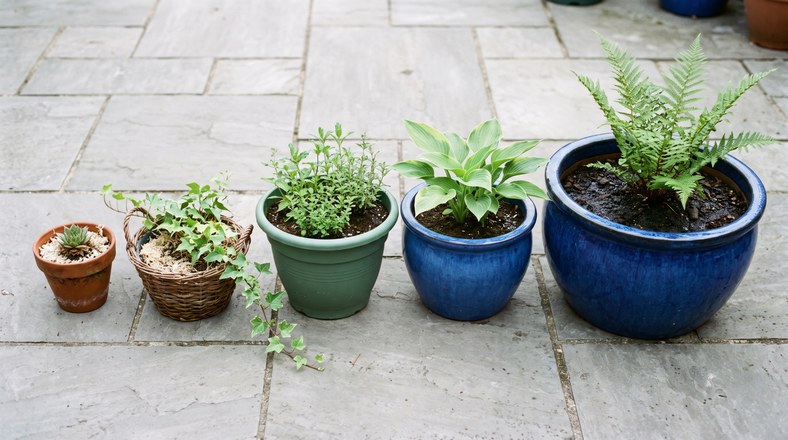
- Pot size and material. Small pots hold little compost and dry fastest, and unglazed terracotta is the thirstiest of all because it breathes moisture out through its sides, drying roughly twice as fast as the same size plastic pot. Large glazed or plastic tubs hold the most damp compost and last longest. Hanging baskets, small and open to the air on every side, dry quicker than anything.
- The weather. A mild, cloudy spell around 18 to 22C is gentle on pots. A UK heatwave in the high 20s or low 30s Celsius, with a drying breeze on top, can double water loss.
- The plant. Tomatoes, ferns, hanging basket bedding and anything in full flower drink hard. Established herbs, grasses, succulents and Mediterranean plants such as lavender will shrug off a dry week.
Roughly how long a well soaked pot lasts
Realistic UK summer figures for a pot given a thorough soak and no other help:
- Small pots and hanging baskets: around 1 to 2 days in warm weather, and as little as a few hours for a basket in a heatwave.
- Medium pots of 5 to 10 litres: about 2 to 4 days in mild weather, dropping to 1 to 2 days when it turns hot.
- Large tubs of 30 litres or more: 4 to 7 days in the shade, though still only 2 to 3 days if left in blazing sun.
Match your days away to an approach
Cross your trip length with the forecast and only one or two options really fit. Err on the generous side, because a British forecast can turn.
- A long weekend of 2 to 3 days, mild: a deep soak plus grouped shade is usually all it takes.
- A long weekend in a heatwave: add saucers or trays of water, or stand small pots in a shaded water bath.
- Up to a week: add a feeding method such as bottle drippers, a wicking reservoir, or self-watering spikes and cones.
- Two to three weeks, or any long spell of heat: fit a drip kit on an automatic timer or ask a neighbour to call in. Nothing else reliably covers this long.
Indoor pots are the easier case: with no sun or wind on them they dry far more slowly, so most houseplants manage a week or more after a good soak.
Give Every Pot a Deep Soak Before You Leave
Whatever else you set up, send your pots off holding as much water as they possibly can. Do this on the morning you leave, or the evening before, so they start the trip fully charged rather than half a day down already.
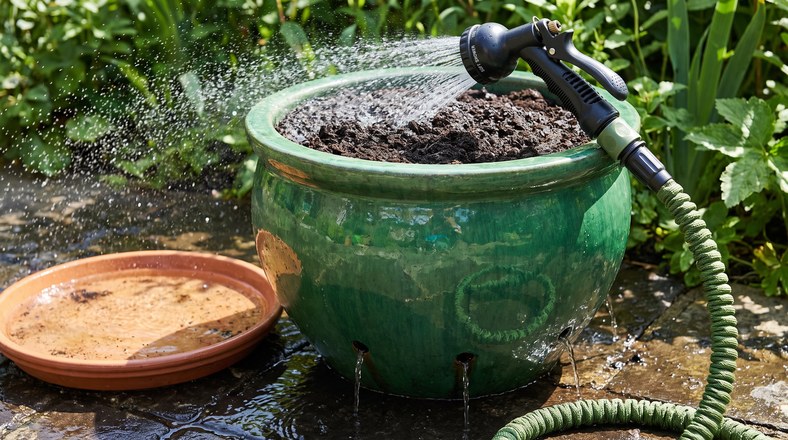
- Water slowly, then water again. One quick pass wets only the top few centimetres and fools you into thinking the job is done. Water each pot until it runs freely from the drainage holes, wait a few minutes for it to soak in, then repeat. A large 40cm tub can swallow 3 to 5 litres before the rootball is properly wet through.
- Dunk small and dried-out pots. Compost that has dried hard turns water repellent, and a can poured over the top just runs down the gap at the sides and out of the bottom. The cure is to stand the whole pot in a bucket, trug or sink with water halfway up the sides and leave it until the bubbles stop rising, usually 10 to 20 minutes, then lift it out to drain.
- Re-wet the surface with a fine spray. A gentle mist breaks the water repellent crust on top of dry compost far better than a heavy pour, so the next watering soaks in rather than running off.
Doing this by can is slow once you have more than a handful of pots, which is where a hose earns its keep. An expandable hose such as the HOMOZE 50ft is light to drag round a patio full of containers and coils away small afterwards, so soaking a whole garden becomes a five minute job. Fit a multi-jet spray gun like the Hozelock model on the end and you get a soft shower setting that soaks each pot evenly and re-wets dried compost gently, plus the reach to refill hanging baskets without a stepladder. Keep it off the hard jet, which blasts compost over the rim and runs straight down the sides without wetting the middle. A hose is also the quickest way to fill saucers, reservoirs or a water bath before you go.
Group Pots in Shade and Slow the Drying
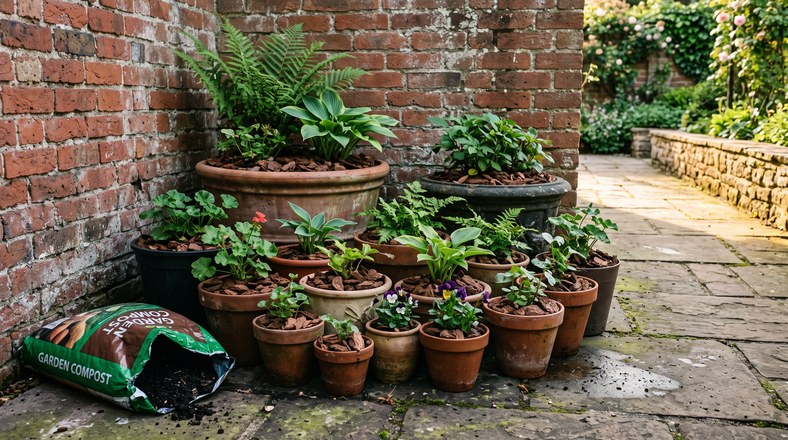
Every watering method works better, and lasts longer, if the pots are losing less water to begin with. These changes cost nothing and buy roughly a day or two on their own, while making a soak or a reservoir stretch much further.
- Group the pots into one tight cluster. Huddled together, plants shade each other and their pots, and the group traps a pocket of more humid air that slows evaporation. Put the smallest and thirstiest pots in the middle where they are most sheltered, and bring hanging baskets down to stand at ground level with the rest, since they dry fastest of all.
- Move them into shade. A spot against a north or east facing wall, or under a tree or garden table, keeps the fierce midday sun off. Even sun lovers cope with a week in shade, and out of direct sun the compost can dry less than half as fast. Stand them on soil, grass or gravel rather than baking paving.
- Get them out of the wind. A breezy, open position dries pots surprisingly quickly, so a sheltered corner matters as much as the shade itself.
- Sink small pots into a border. Drop them up to the rim into a gap in a bed or raised bed, and as the compost dries it draws moisture back from the surrounding soil, keeping a small pot going for several extra days.
Mulch and the right compost hold moisture longer
A 2 to 3cm mulch of bark, gravel or even a folded sheet of newspaper over the compost surface cuts evaporation from the top of the pot, where most water escapes, and takes minutes the day before you leave.
The compost underneath matters just as much. Fresh, moisture retentive multipurpose compost holds water far better than old compost that has shrunk from the sides and turned water repellent, letting water run straight down the gap and out. If you are potting on a root bound plant or topping up levels before a trip, a decent moisture holding compost such as Pelle and Sol's gives the roots a bigger, damper reservoir to draw on while you are away.
DIY and Low-Cost Ways to Water Pots While Away
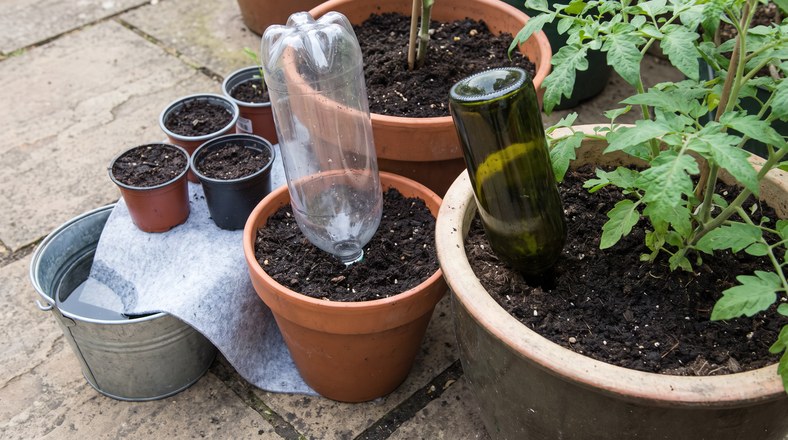
For anything longer than a mild long weekend, you need something feeding water into the pots while you are gone. None of these costs more than a length of rope, and all run on stored water, so they work through a hosepipe ban. Cheapest first, with a realistic idea of how long each buys you, and knock the figures down in a heatwave.
Bottle drippers and upturned bottle waterers - about 2 to 4 days
The classic hack, and a good one. Pierce the cap of a clean, full 2 litre bottle two or three times with a drawing pin, screw it back on, and sink it neck down a few inches into the compost beside the plant. The drip rate is the whole game, set by the number of holes: two pinholes empty a bottle over roughly 2 to 4 days into a medium pot. Test it at home first, checking how far the level drops in 24 hours, and adjust until one bottle covers about a day per 400 to 500ml. A no-holes version works too: plunge a filled bottle, or a heavier wine bottle, neck first into pre-soaked compost, and it releases water only as the soil dries and lets air bubble up. Allow one bottle per medium pot, two for a big thirsty one. It falls down when a heatwave outpaces the drip or the holes clog, so size generously and never trust a single small bottle for a fortnight.
Wicking from a reservoir - about 5 to 14 days
Wicking is the steadiest DIY method because it self regulates: an absorbent wick with one end in water and the other in the compost draws moisture up by capillary action at roughly the rate the pot dries, so it neither floods nor runs dry while the reservoir lasts. For a single pot, push a soaked 1cm cotton rope, or a strip of old towel, 5cm into the compost near the roots and drop the other end into a bucket set level with or just above the pot. For a group of small pots, lay capillary matting on a tray or bench with one end trailing into a reservoir and stand the pots on the wet mat so they wick up through the drainage holes. It only works where compost meets mat, so seat the pots firmly with no feet or crocks. A 10 litre reservoir feeding two or three pots runs for a week or more.
A shaded water bath - about 1 to 2 weeks for small and indoor pots
Indoors, the bath or a big sink becomes your reservoir. Lay an old towel along the bottom, run in a few centimetres of water to soak it, and stand houseplants on the wet towel out of direct sun so they wick from below. A bath of thirsty plants will happily sit for a week or two. Keep it out of a sunny window, keep the water shallow, and skip it for succulents, lavender and other drought lovers that rot with wet roots.
Saucers and trays - a short trip trick only
Filling a saucer or tray under each pot before you leave gives the roots a small reserve for a day or two, and a deep seed tray under a group of small pots works well. Treat it strictly as a short trip measure though. Sitting in full saucers for more than a couple of days waterlogs the compost, starves the roots of air and invites rot, and the water turns sour and breeds mosquitoes. Keep it shallow, keep it short, and never do it to anything that hates wet feet.
Self-Watering Spikes, Cones and a Drip Kit on a Timer
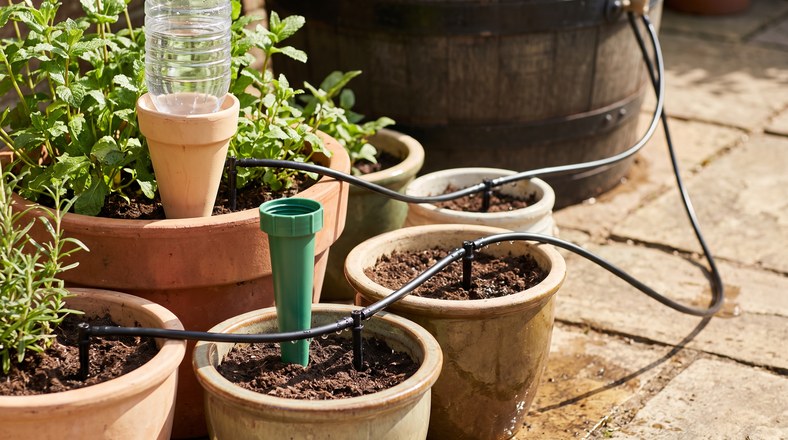
If you would rather buy a ready made answer, three tiers of kit take the guesswork out, and none costs much. We have not tested a specific spike, cone, kit or timer ourselves, so treat this as honest guidance on how each type works rather than a recommendation of any one product.
Self-watering spikes and stakes
These push into the compost and either screw onto a filled plastic bottle or feed from a small reservoir, releasing water as the soil dries. They are the tidy, no-holes version of the DIY bottle dripper, and a bottle topped spike typically keeps a medium pot going from several days up to a week. The adjustable ones let you dial the flow, which is worth having.
Ceramic watering cones
A step up in consistency, terracotta or ceramic cones of the Aquasolo type work by clay porosity. You screw the cone onto a filled bottle, or run a tube to a reservoir, and water seeps out only as the surrounding soil dries and pulls on it. Because the clay self regulates they rarely over or under water, and a decent one on a 1.5 litre bottle can hold a medium pot for up to two weeks in mild weather, indoors or out. The failure mode is a cone that dries out and loses its seal, so bed it in well and soak it first.
A drip kit on a battery tap timer
For a whole patio, or any trip beyond a couple of weeks, this is the only truly dependable answer, since it does not rely on a reservoir you fill. A basic kit runs a hose from the outdoor tap, with thin spaghetti tubes and an adjustable dripper pegged into each pot, and a battery timer opens the water for a few minutes at dawn and dusk to cut evaporation. It keeps the pots watered for as long as the mains stays on. Fit each pot with its own adjustable dripper so thirsty tomatoes and drought tolerant herbs on the same line each get the right amount, and run the system for several days before you leave to catch a popped tube, a dripper set too fast or a timer programmed wrong while you can still fix it.
Keeping a drip kit going in a hosepipe ban
A mains fed drip system counts as a hosepipe and is usually restricted along with sprinklers during a summer ban. The way around it is to feed the kit from a water butt instead of the tap: a timer and small pump drawing on stored rainwater keeps delivering to every pot, since butt water is exempt. Fill the butt before you go and it waters on through the ban.
Backup Plans and Checking Your Pots When You Get Home
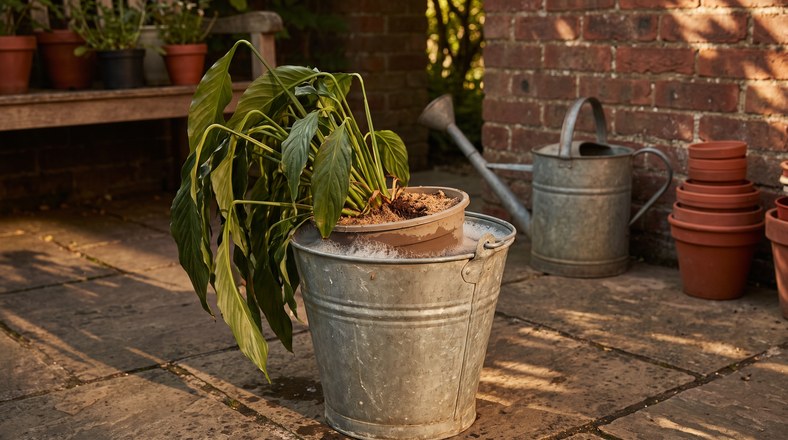
For the longest trips, no gadget adapts to a surprise heatwave the way a person can. Here is how to line up a safety net, what to steer clear of, and how to rescue anything that has dried out by the time you get back.
Line up a neighbour or plant sitter
Beyond a fortnight, through a heatwave, or wherever you have prized plants, a neighbour with a watering can beats almost any kit, saving plants that an automatic system would lose in a hot spell. Make it easy for them: group all the pots in one shaded place so watering takes five minutes, leave a full can and a hose ready, and jot down which pots are thirsty and which to leave alone. Offer them the ripe tomatoes, courgettes or sweet peas they pick as a thank you, and leave a phone number in case something looks badly wrong.
What not to do
- Do not leave pots baking in full sun. Move them into shade before you go, and water the compost rather than the leaves, which scorch and lose more water when wet in strong sun.
- Do not rely on a lawn sprinkler for pots. A sprinkler on a timer is fine for beds and lawn, but it throws water in a broad circle and mostly misses the small target a pot presents. Pots need water aimed straight at the compost.
- Do not overfill saucers for weeks. A day or two in a shallow saucer is a lifesaver, but sitting in deep water for a fortnight drowns the roots of anything that is not a bog plant and turns the compost sour.
Reviving a bone dry pot when you get home
Check the pots the moment you walk back in, before you unpack, especially in warm weather. Most will be fine. The ones to worry about are bone dry and wilting, with compost shrunk away from the sides. A can poured on top just runs down the gap and out of the bottom, so stand the whole pot in a bucket or trug deep enough to cover the compost surface and hold it there until the bubbles stop rising, which means the rootball has soaked right through. Lift it out, let it drain, and move it into the shade to recover. After that, pinch off scorched leaves and dead flowers, water normally, and let them settle. Most bounce back within a week.
Frequently Asked Questions
How long can potted plants go without water in a UK heatwave?
Less time than most people expect. After a good soak, a small terracotta pot or a hanging basket can dry out in a single hot day, sometimes within hours, a medium 5 to 10 litre pot in one to two days, and a large tub in two to three days even in shade. Terracotta dries fastest because it loses water through its sides. Moving pots into shade and grouping them together roughly doubles those times, which is why it is the first thing to do.
Will grouping pots together really help?
Yes, and it is one of the simplest wins there is. Pots bunched together in a shaded, sheltered corner shade each other's sides and trap a pocket of humid air around the leaves, so they lose water far more slowly than pots dotted about in full sun and wind. It also gathers everything into one place, which makes the job quicker for you before you leave and for any neighbour who calls in.
Should I stand my pots in water while I am away?
Only shallow, and only for a short trip. A saucer or tray with 2 to 3cm of water under thirsty annuals, bedding or vegetables gives them a useful reserve for a day or two. Leaving pots sitting in deep water for a week or more is a different thing: it waterlogs the compost, starves the roots of air and rots them, and it never suits succulents, lavender or Mediterranean herbs that hate wet feet. For a longer trip, wick from a reservoir or use an indoor water bath on a damp towel instead, which keeps the compost moist without drowning the roots.
Can I keep pots watered during a hosepipe ban?
Yes. A ban restricts hoses, sprinklers and mains fed drip systems, not watering by hand or from stored water, and water from a water butt is exempt. Give everything a deep soak from stored water before you go, then rely on bottle drippers, rope wicks, capillary matting or a water bath, all of which run on a reservoir you fill in advance. You can even keep a drip kit going by feeding it from a butt rather than the tap.
Related Reading
- How to Protect Plants from Frost in the UK
- HOMOZE 50ft Expandable Garden Hose review
- Hozelock Multi-Jet Spray Gun review
- Pelle & Sol 10L Multi-Purpose Compost review
Disclaimer: This article contains Amazon affiliate links. We may earn a small commission from qualifying purchases at no extra cost to you.