
Metal Garden Obelisk for Climbing Roses UK: Sturdy to Some, Flimsy to Others
We earn commission from qualifying Amazon purchases. It costs you nothing and does not affect what we recommend.
One in ten of the most recent buyers left this budget steel obelisk a single star. Sixty-four in a hundred gave it five. The gap is not down to luck: it comes from how you build the thing and where you stand it.
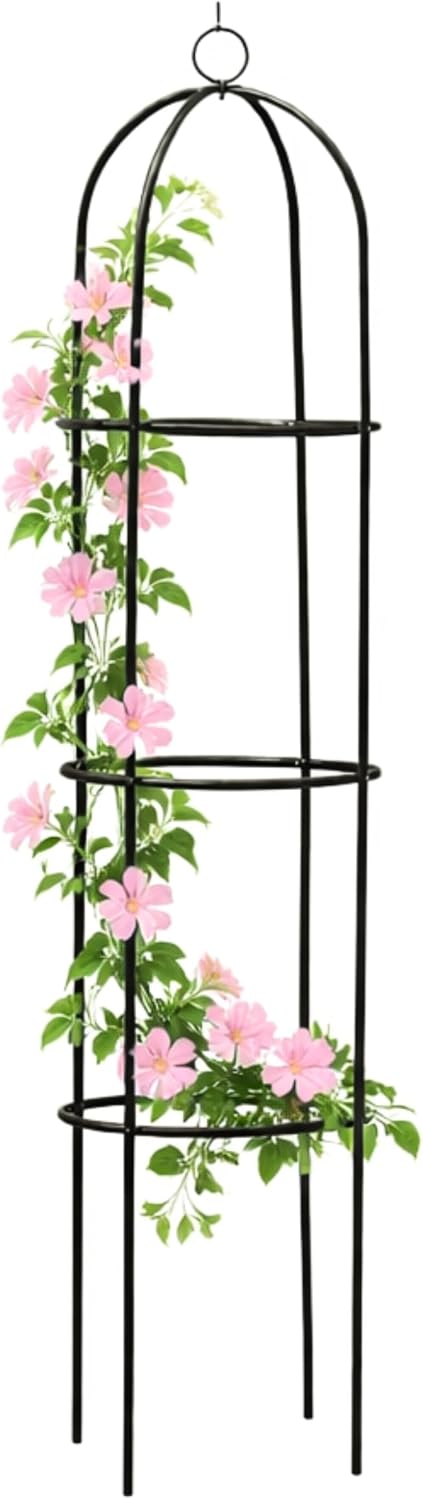
Two reviews of this obelisk, a fortnight apart. One buyer ended up tethering hers to a bamboo cane with a plant pot wedged in the middle to stop it toppling. Another has had it up for a year, faded but completely intact, carrying a passion flower and a wisteria together. Same 198cm steel frame, same listing, wildly different verdicts.
That split is the whole story with this budget garden obelisk. Across the 100 most recent UK reviews the average sits at 4.17 stars, almost exactly the 4.2 lifetime figure from 2,881 ratings, and 64 of those 100 buyers left five stars. Yet 10 left one star, and a run of reviews call the same product flimsy that others call strong. We read all 100 to work out which camp you are likely to land in, and what you can do to tip the odds in your favour.
Why One Buyer Calls It Strong and the Next Calls It Rubbish
Read the one-star reviews next to the five-star reviews and you would think they were describing different products. Jean ended up tethering the frame to a bamboo cane and dropping a plant pot in the base to keep it upright: “I have had to tether it to bamboo to stop it falling down and put a plant pot in the middle to secure it.” Est Arnall, buying the same obelisk, wrote the opposite: “It's strong and is holding up in these winds. It is not flimsy and the quality is better than expected.”
Thirteen of the 100 recent reviewers describe the frame as flimsy, wobbly or unstable. That is a real cluster and worth taking seriously, but it sits against 78 reviews at four or five stars, so it is not the common experience. The tie-breaker turns up again and again in the wording: this is a light steel frame that borrows most of its rigidity from the ground. Juliet, who bought two, put it plainly: “Very strong once set in the ground.”
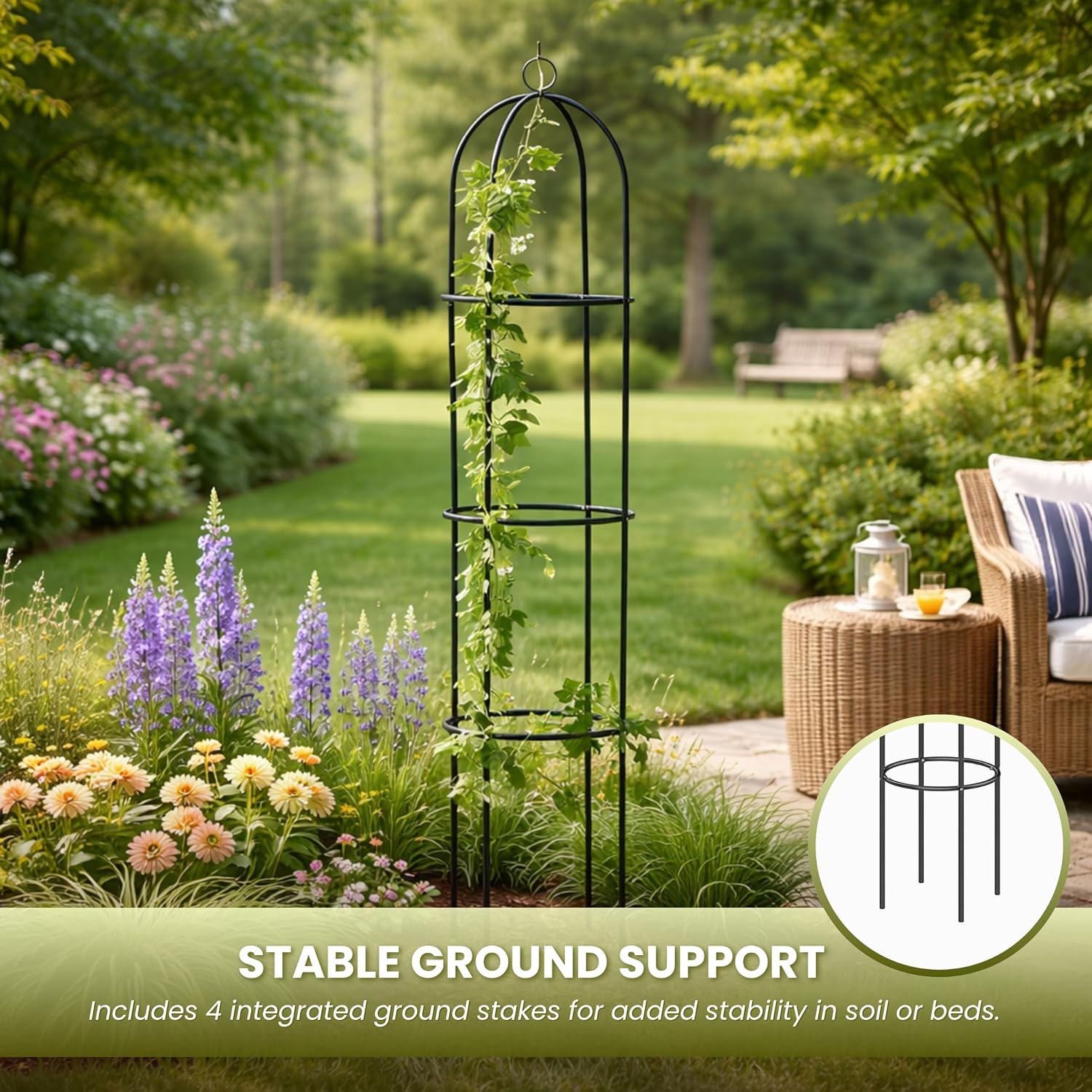
The design backs her up. The listing images show four integrated leg stakes meant to be pushed into soil or a bed, not a weighted base for standing on a patio. Sunk into a border the way it is intended, most buyers find it holds. Stood loose in a large pot, or left in an exposed, windy spot without extra staking, and the wobble complaints ring true. One reviewer growing jasmine still tied the frame down in strong winds and was happy with the result. The packaging label, printed in four languages, also warns to handle it with care: the cut steel ends are sharp, which is behind the harshest one-star review calling the edges dangerous.
Getting It Built Without Losing an Afternoon
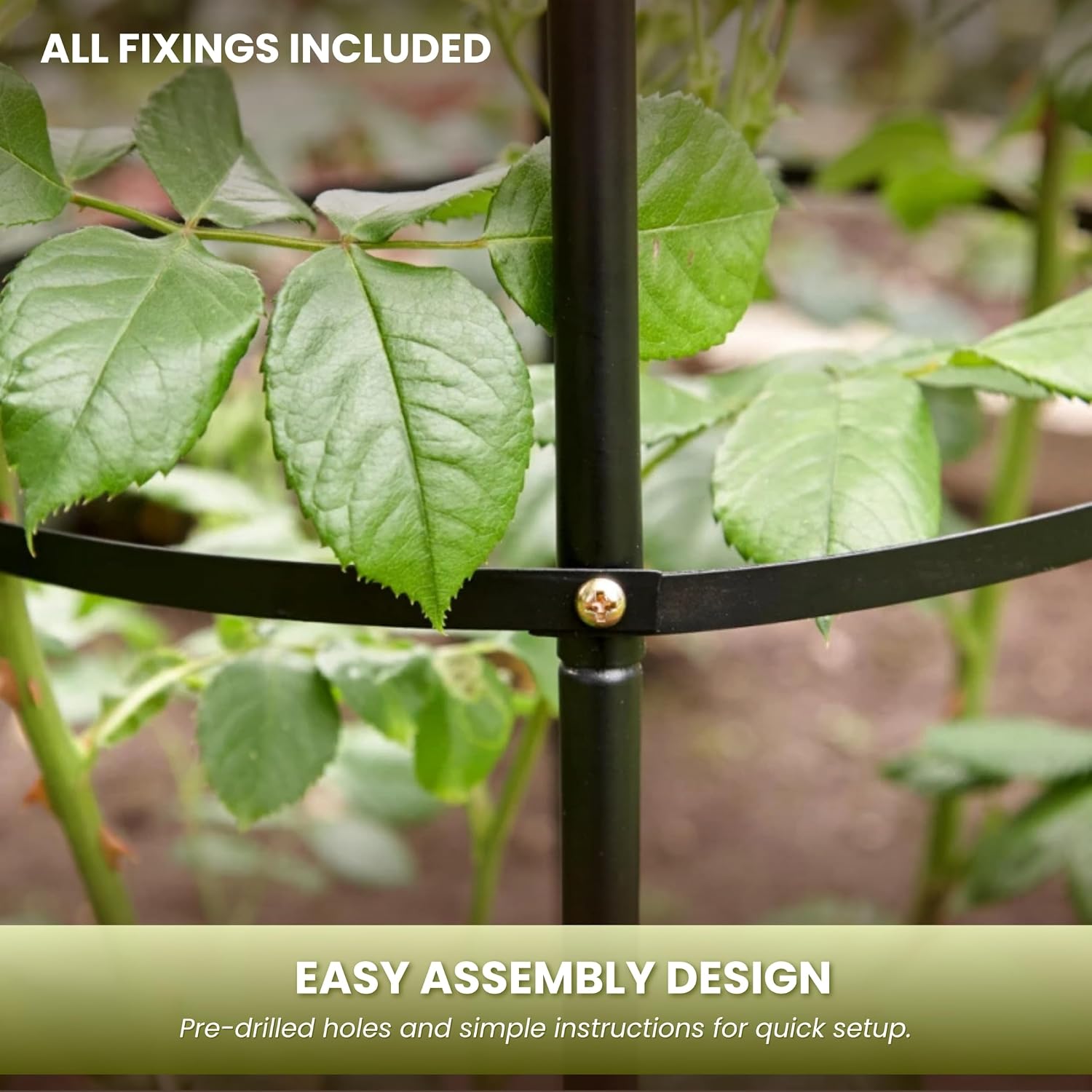
The listing calls assembly easy and the reviews mostly agree, but easy here means not complicated once you understand it, rather than fast. You are bolting together four uprights, three horizontal rings and a domed top with a bag of small screws and nuts, and the finish depends on your patience more than your DIY skill. M4ryrc settled the can-I-do-it-alone question: “Although it says 2 people are needed to assemble this obelisk, I did it all by myself and I am a 68 Yr old grandmother!” Typical build times in the reviews land around 20 to 30 minutes.
Two practical warnings come up repeatedly. First, no tools are supplied. You need a Phillips or pozidriv screwdriver and something to grip the nuts on the far side, a small spanner or pliers, and the listing photo of the fixings does not make that obvious. Second, the instructions are a single diagram rather than step-by-step text, and a few buyers got none at all. One even received the instructions for a garden arch instead. Helenthemum flagged the one detail that trips people up: “it's not particularly clear that the rings go on the outside of the verticals, and not inside.”
Order matters more than anything. The maker says to build it in sequence (the listing says top to bottom) and, crucially, not to tighten any screw until the whole frame is together, because the holes need room to shuffle into line. Several reviewers who fought it had tightened as they went. Leave everything finger-tight until the end, then nip it all up, and the fiddly reputation mostly evaporates. Get that wrong and you are in the camp that called it a nightmare in a million pieces.
This 198cm Steel Garden Obelisk
A tall, budget-friendly support for climbing roses, clematis and sweet peas that turns sturdy once you stake it firmly into a border.
The Parts Lottery, and Why You Should Count First
If there is one real gremlin in this product, it is quality control on what turns up in the box. At least five of the 100 recent buyers report a screw, nut or pole missing or unusable on arrival, and a related group found rods bent or holes that would not line up. Ruby's two-star review catches both: “some of the round rods were bent and distorted... Screws to assemble were missing.” One buyer ended up with a pole that had no holes drilled at all, leaving the frame standing on three legs instead of four.
The reassuring part is how recoverable it usually is. Amanda still left four stars after a missing-nuts scare because the seller sorted it: “I had to get in touch with the seller because the nuts were missing.” The nuts and bolts are a standard small size, so a few spares from a hardware shop will finish the job if you would rather not wait for a replacement. Our advice is blunt: before you build anything, tip the bag out and count every screw, nut and pole against the diagram. Five minutes there saves the frustration that drives most of the angry reviews.
Worth knowing who makes it. Amazon lists the brand as Generic, but the safety label on the packaging carries Garden Mile branding. That mismatch is common with budget Amazon listings and does not change what arrives in the box, but it explains the blank brand field if you go looking for a name.
From Sweet Peas to Wisteria: What It Actually Holds
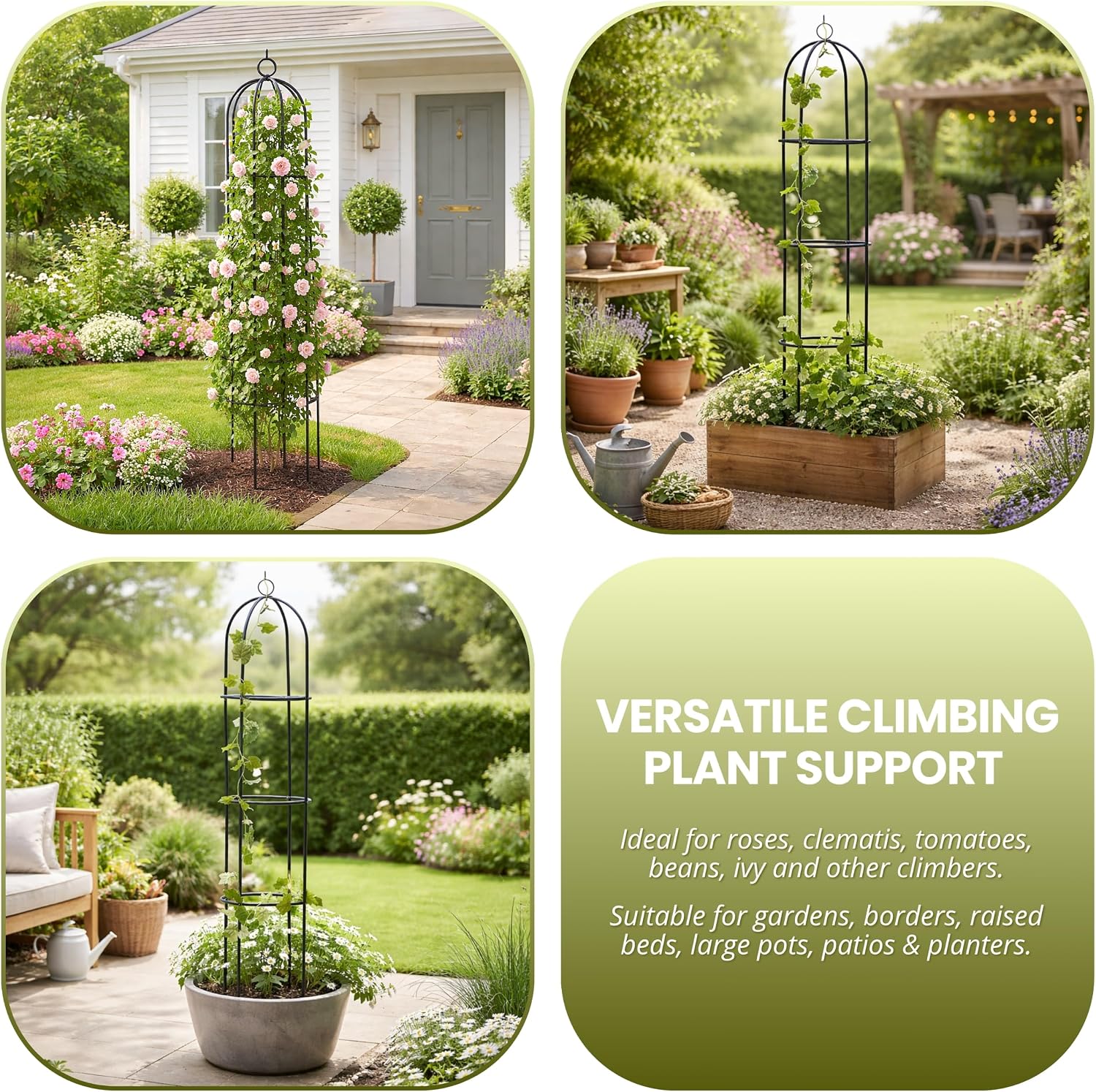
For a light frame it carries a surprising range. In the 100 reviews, buyers have it holding climbing roses, clematis, sweet peas, runner beans, cucumbers, honeysuckle, jasmine and, in one case, a passion flower and a wisteria on the same tower. The circular cage suits anything that twines or scrambles, and the three rings give tendrils something to grab at every level. Mariza uses hers to keep a rose in check and keeps coming back: “it's the second I've bought now and I'll keep buying for anymore roses.”
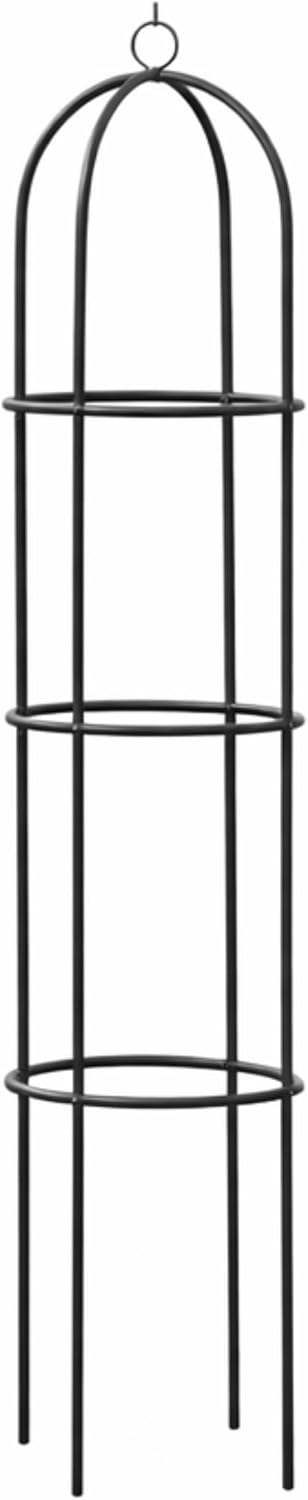
Size is the thing to get straight before ordering. The listing quotes 198cm high and 43cm wide, and the dimensions image rounds that to roughly 190 by 40cm. Either way it is tall, and a run of reviewers were caught out, describing it as huge or taller than expected. Remember that a few inches disappear into the soil once the legs are staked, so the working height above ground is a little less than the box figure. In a border that height is the whole point; in a small courtyard or a modest pot, measure the space first.
It is at its best sunk into a bed or a large, heavy planter where roses, clematis or sweet peas can climb the full height and hide the metalwork by midsummer. At least six recent buyers mention already owning two or more, usually running a matched pair either side of a path or a doorway, which is exactly the look the listing photos are selling. Reviewers who priced up the metal versions in garden centres kept coming back to this one instead.
Rust, Winter, and the Garden Cane Trick
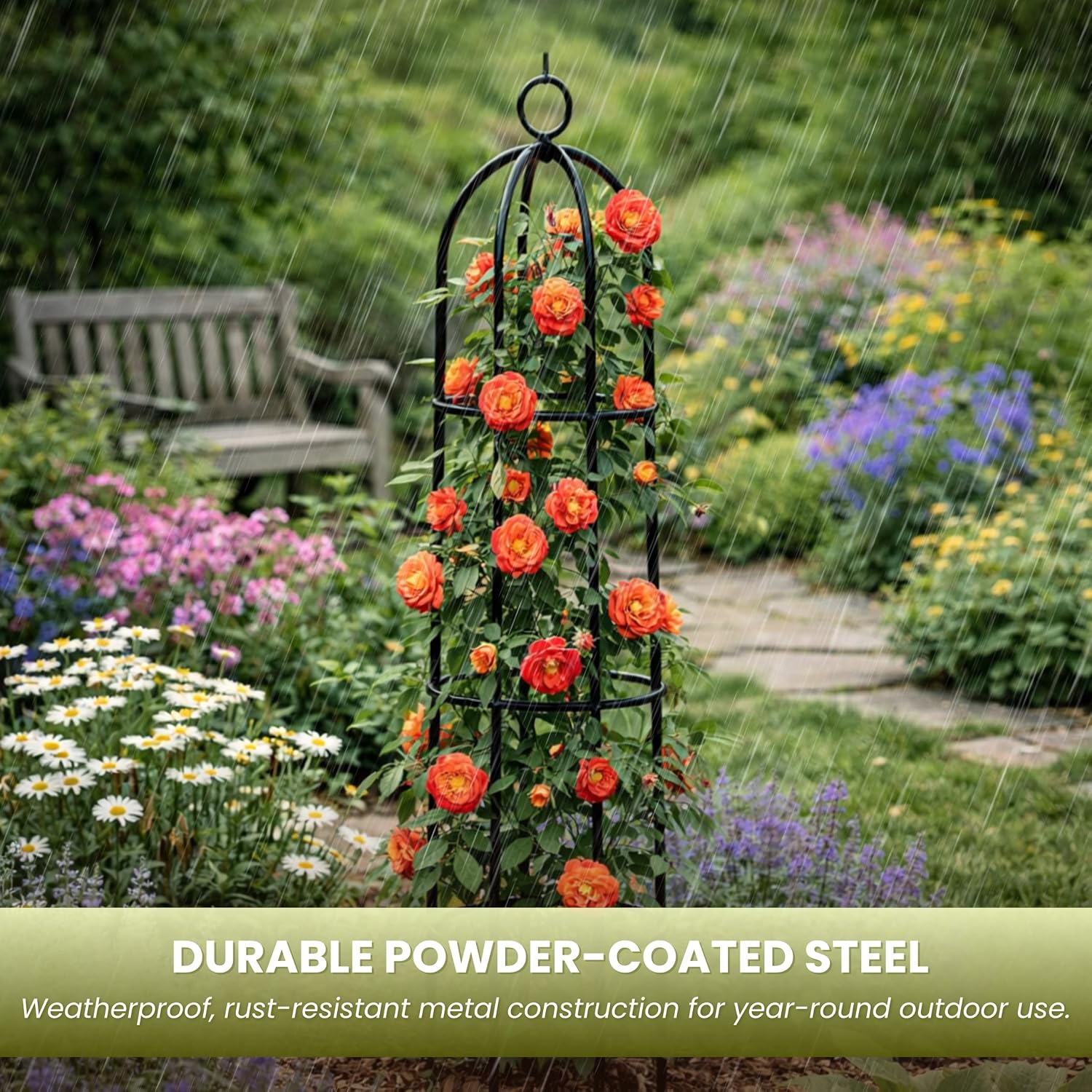
The frame is powder-coated steel, and the listing leans hard on weatherproof, rust-resistant, year-round outdoor use. On the coated tubes that claim holds up so far. The standout long-term review comes from a buyer a full year in: “Been up a year now... Have weathered quite well, although have obviously faded. Still completely intact and supporting a passion flower and wisteria.” Faded but intact after a British year outdoors is a fair result at this price.
Rust is still the open question rather than a proven fault, because most reviews are only a season old. Where buyers do worry, it is about two spots the coating does not protect: the bright silver nuts and bolts, which one reviewer points out are uncoated and will rust and contrast against the black poles, and any bare cut end pushed straight into wet soil. The clever fix comes from Alan Bibb, who did not sink the metal at all: “I put canes in open tubes at bottom as if you stuck the metal in soil it would rust away very quickly.” Dropping a garden cane into each hollow leg and staking the cane instead keeps the raw steel out of the ground and makes the legs easier to push in.
For a UK winter the fair read is that the coated frame will cope and slowly fade, the fixings may freckle, and how long the whole thing lasts depends on your soil and exposure. Stake it well, keep the bare metal out of standing wet, and tie it in on an open site. Treat it as a support that may need replacing in a few years rather than an heirloom, and it does exactly what it sets out to do.
Should This Obelisk Go in Your Border?
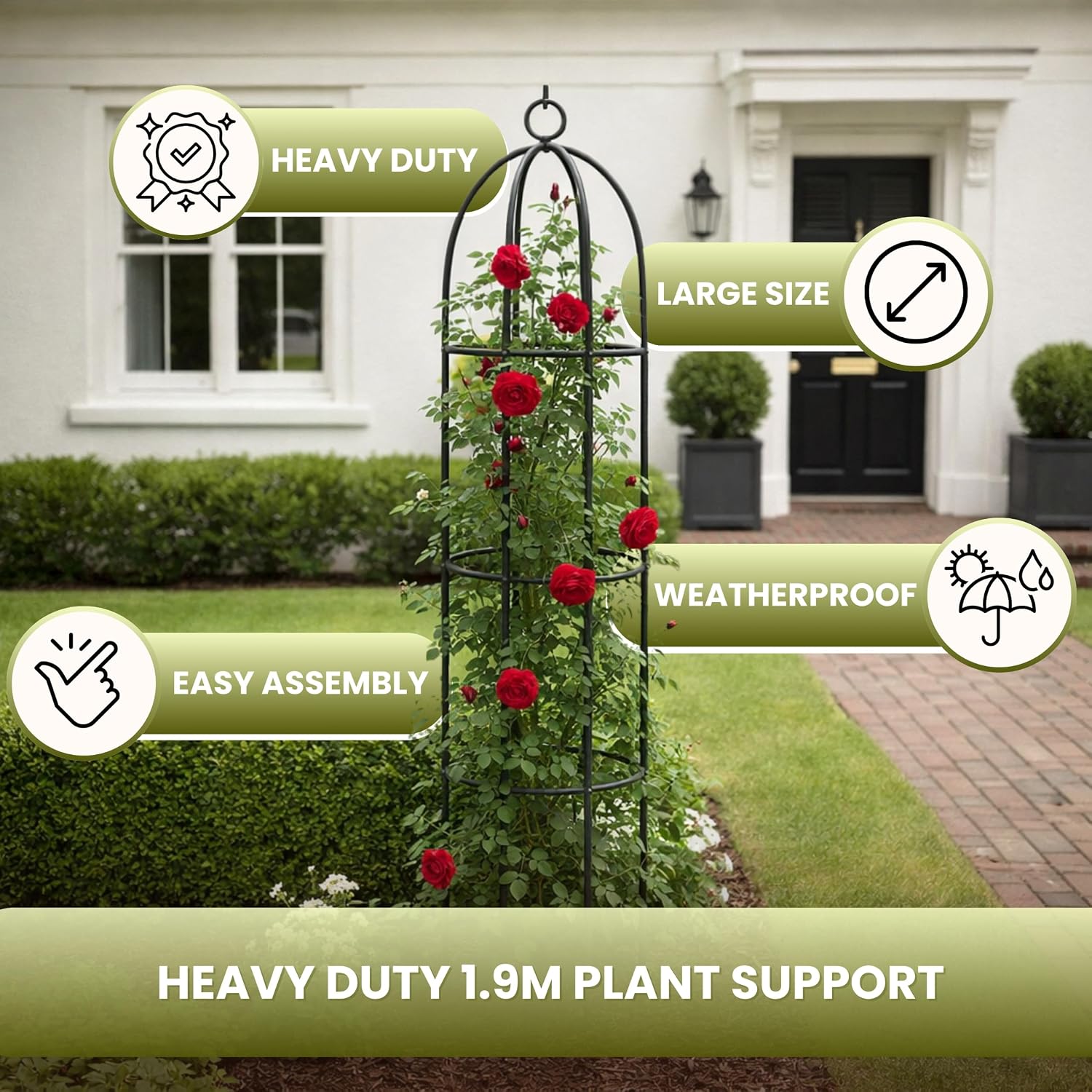
So where does it land? On the numbers this is a four-out-of-five buy, a shade under its 4.2 lifetime badge to reflect the parts lottery and the build faff, but clearly a recommend. The recent 100 reviews average 4.17, 78 of them sit at four or five stars, the flimsy-or-wobbly complaints run to 13 and the missing-part reports to five, both real but both a minority. For height in a border at this price, very little else comes close, and you can check the current listing on Amazon to see where it sits today.
Buy it if you want a tall support for climbing roses, clematis, sweet peas or beans, you have soft ground or a big heavy planter to stake it into, and you are happy to spend 20 to 30 minutes building it with your own screwdriver and pliers. A matched pair either side of a path looks far dearer than it is, and it is the kind of job you only do once a season.
Think twice if your spot is open and windy and you will not add extra anchoring, if you want a heavy freestanding ornament for a patio rather than a staked border support, or if a missing bolt on arrival would ruin your week rather than prompt a quick email to the seller. Go in expecting a budget frame that needs a careful build and firm staking, and it will not let you down. Count your parts first, build it loose, tighten it last, and sink it deep.
This 198cm Steel Garden Obelisk
A tall, budget-friendly support for climbing roses, clematis and sweet peas that turns sturdy once you stake it firmly into a border.